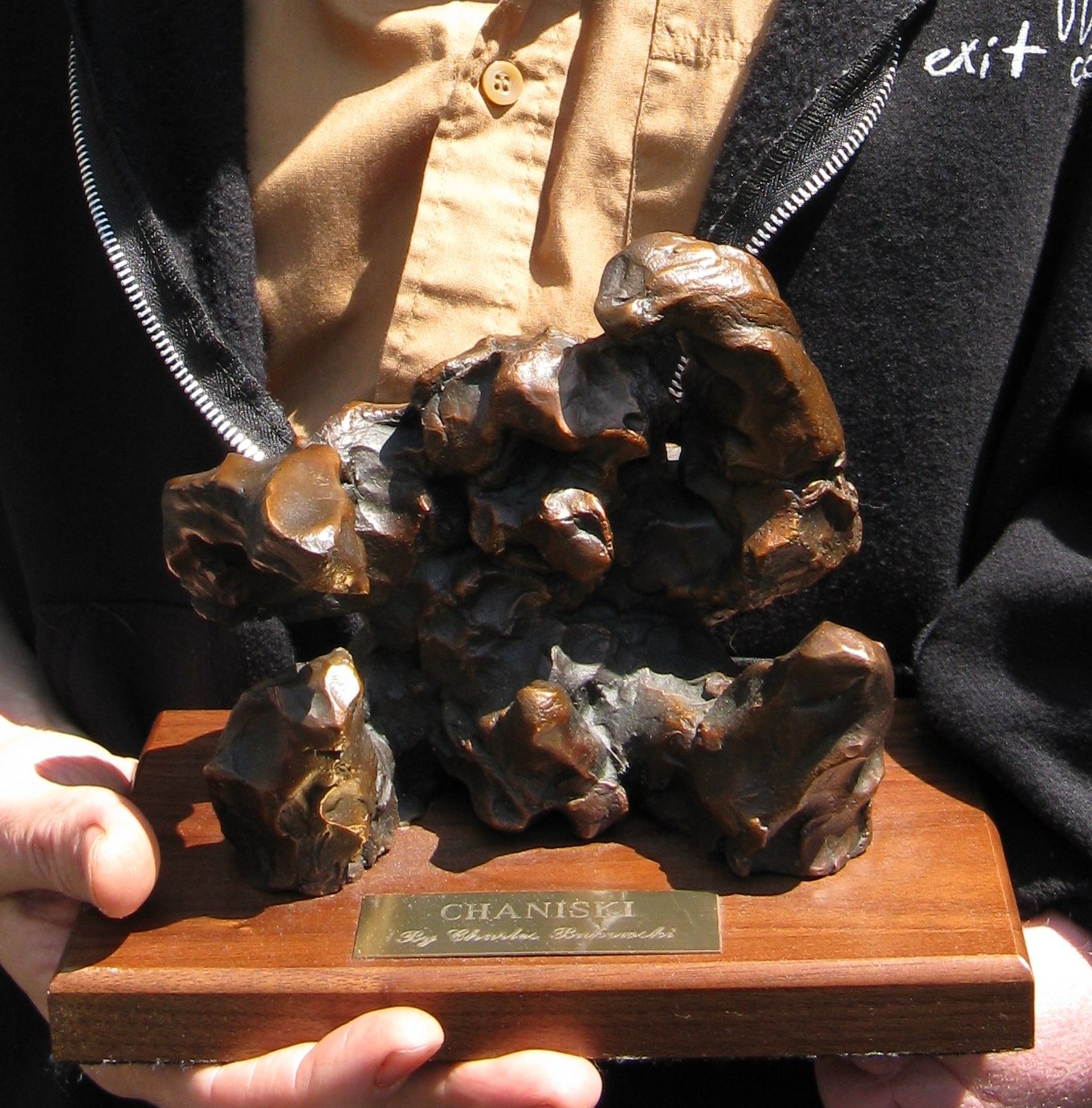
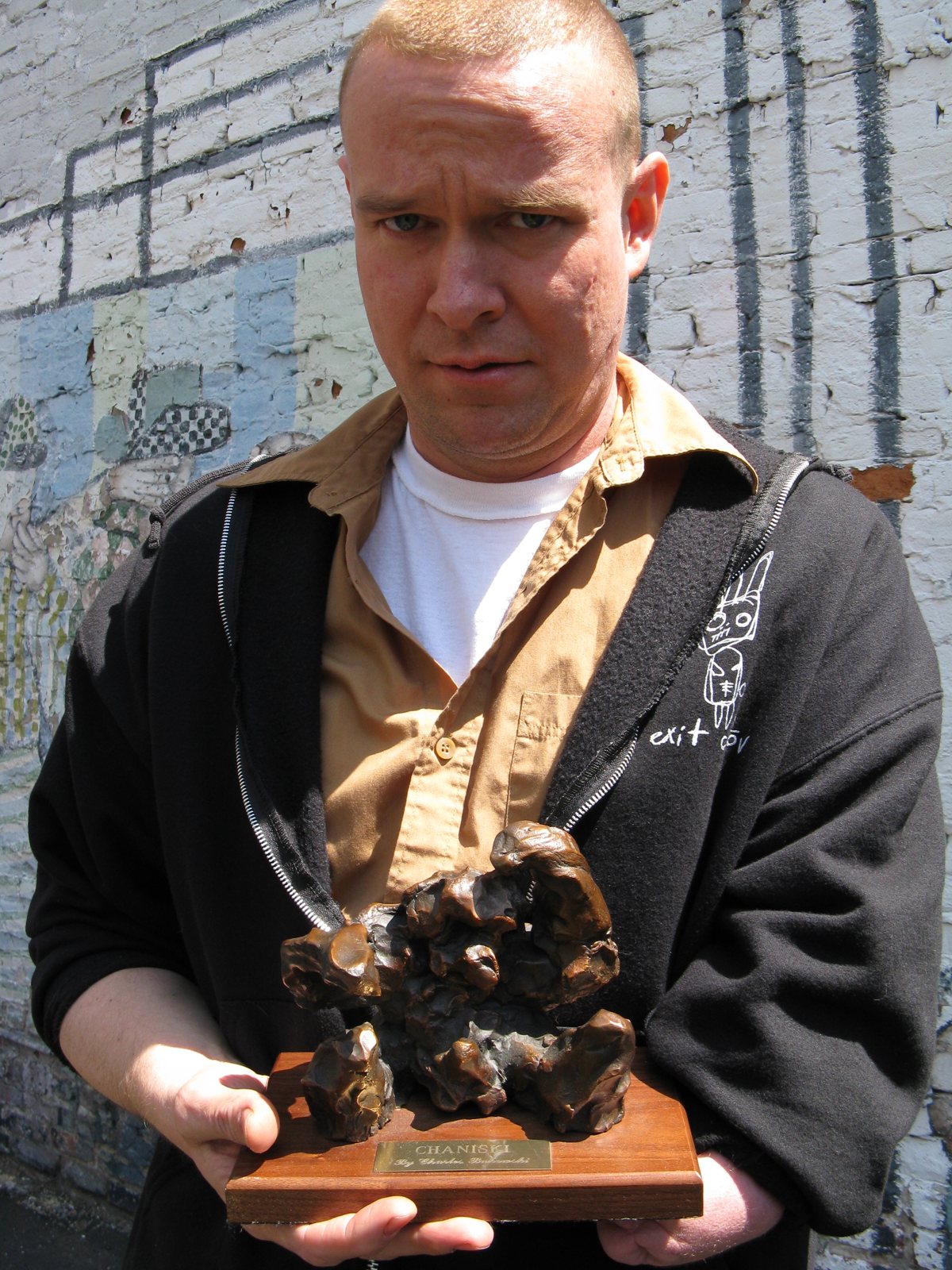
A lump of bronze the size of two fists, pressed out of clay by Charles Bukowski’s own hands on one drunk night in 1971. He tried to destroy it the next morning. Linda King wouldn’t let him. Fifty-five years later it stands guard in a painter’s studio in Washington, DC.
Bronze on walnut · brass plate · two casts made · this one kept by Matt Sesow
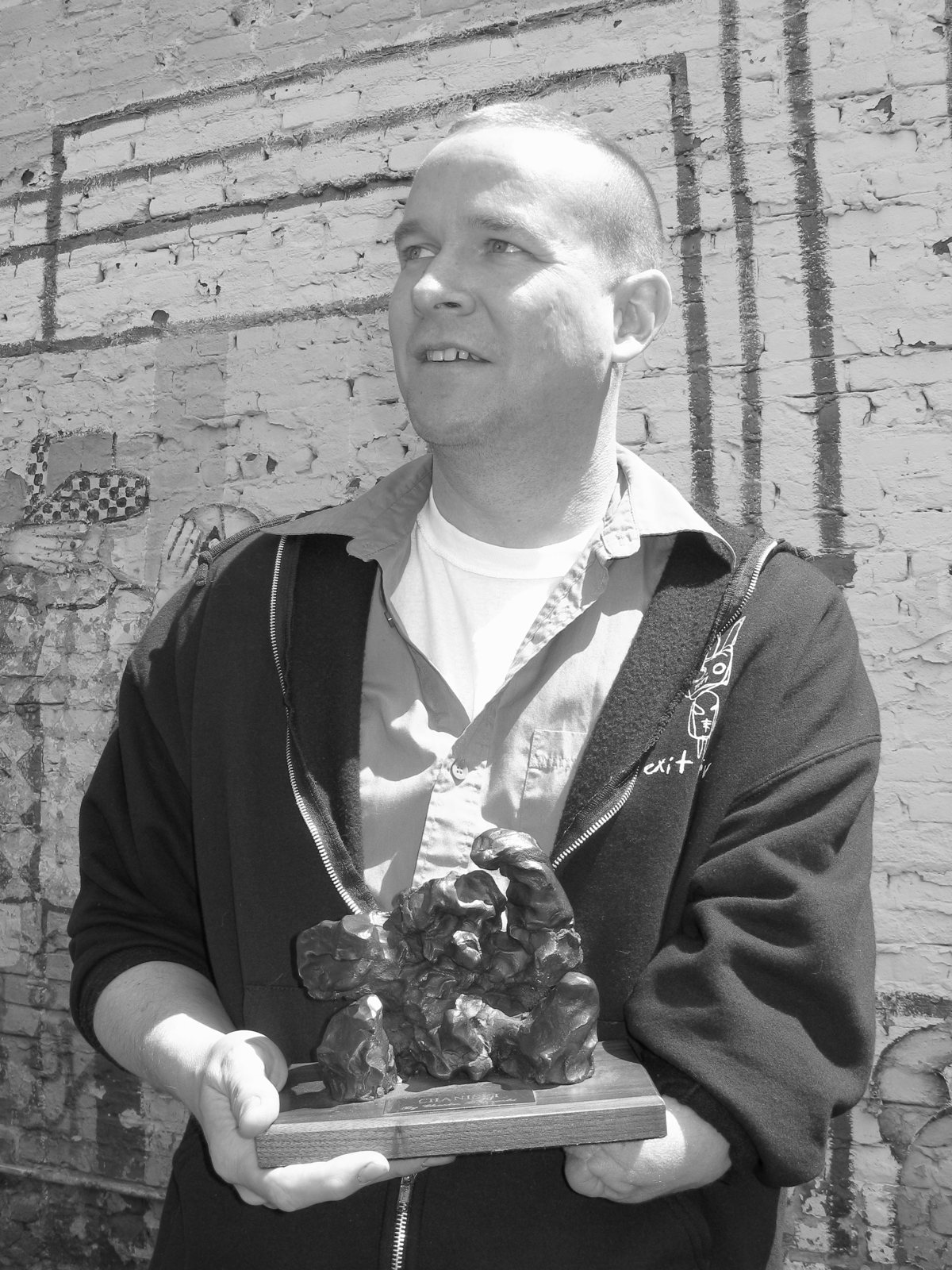
The bronze in Matt Sesow’s hands, San Francisco, April 19, 2008. The plate reads CHANISKI — By Charles Bukowski.
1971Burbank, California One night
“I can make better sculptures than you”
Linda King was the sculptor. That was the whole trouble.
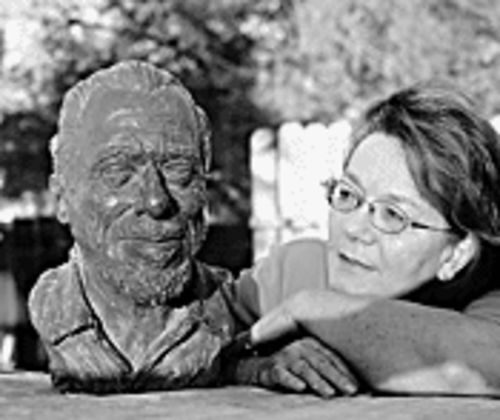
By 1971 she had already spent months with Bukowski across a modeling stand, pushing and scraping clay until it became his head — the bust that has been photographed for half a century. One night at her house in Burbank, bottle going, he decided that anything she could do he could do better, and he said so.
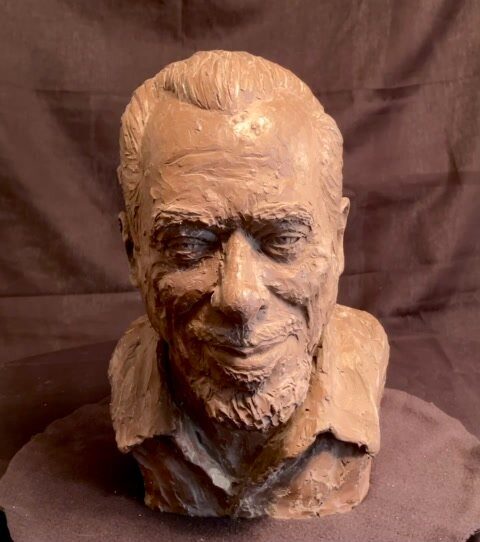
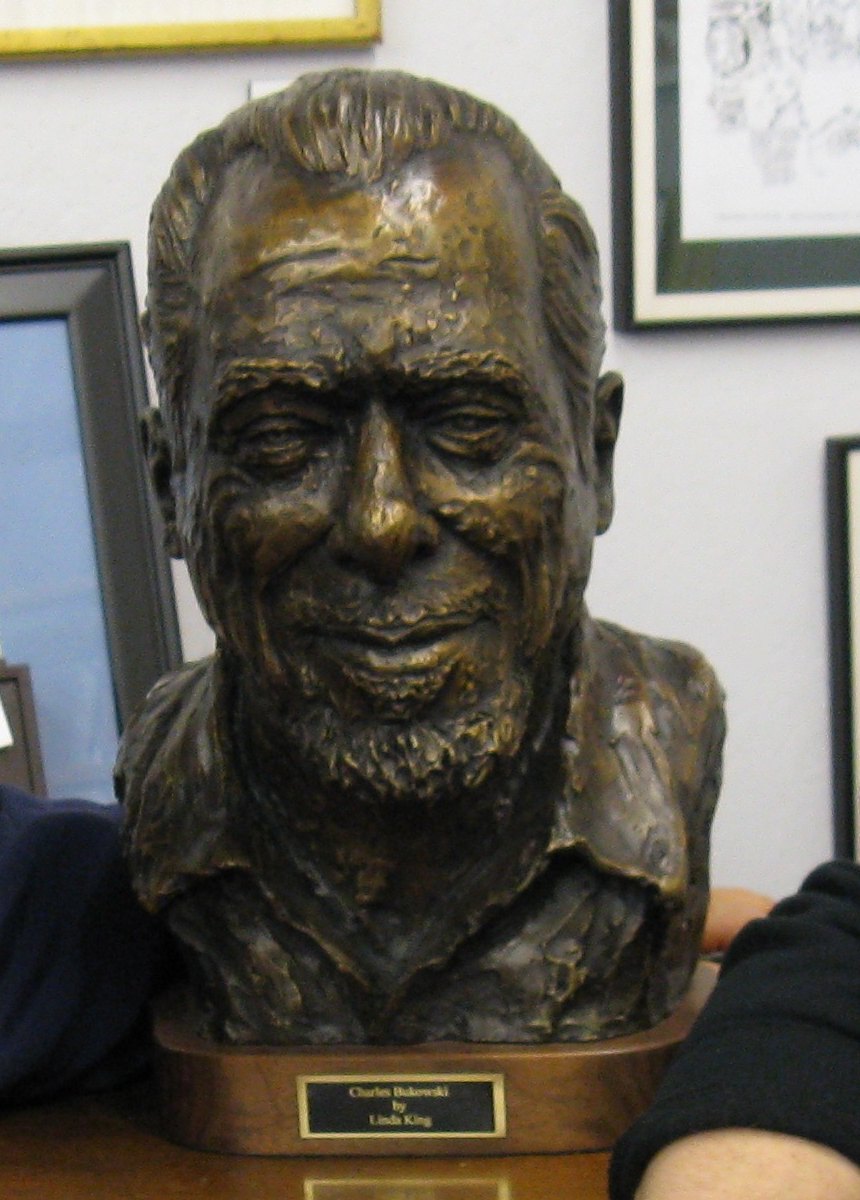
Linda King with her head of Bukowski. From Linda King’s archive.The head, in a clay-toned cast from Linda’s studio.
Then he grabbed the clay.
He made a head of Medusa with snakes pouring out of her skull. He made some smaller things. He worked fast and drunk, with his thumbs and fists. And in the morning, hungover and ashamed of all of it, he started crushing everything he had made.
Here is how Linda tells it, in her own words, to Matt Sesow in June 2026:
Linda King — as told to Matt Sesow, June 2026
“He was drunk and said he could make better sculptures than me. He did a head of Medusa with all the snakes coming out of her head and some other small ones, but he didn’t do it carefully and by morning the snakes were cracking and broken. He woke up hungover in the morning and started destroying all he had made. I saved that one and wouldn’t let him crush it. When two Germans came to my home, they wanted to buy it, but I told them if they paid for a bronze they could have it. I had two made. That’s the story.”
The Medusa didn’t make it; her snakes had cracked apart overnight. What Linda pulled out of his hands was one of the small ones — a hunched, knotted little figure, one arm thrown up over its head, feet planted wide, like something that had just hauled itself up out of the ground and decided to stay.
It was Bukowski’s little man: the scruffy self-caricature he drew beside his signature for the rest of his life. His own alter ego, made solid for what appears to be the only time. His fingerprints are still in it.
Linda’s daughter Clarissa remembers watching him make it.
1920Andernach, Germany → Los Angeles
Hank
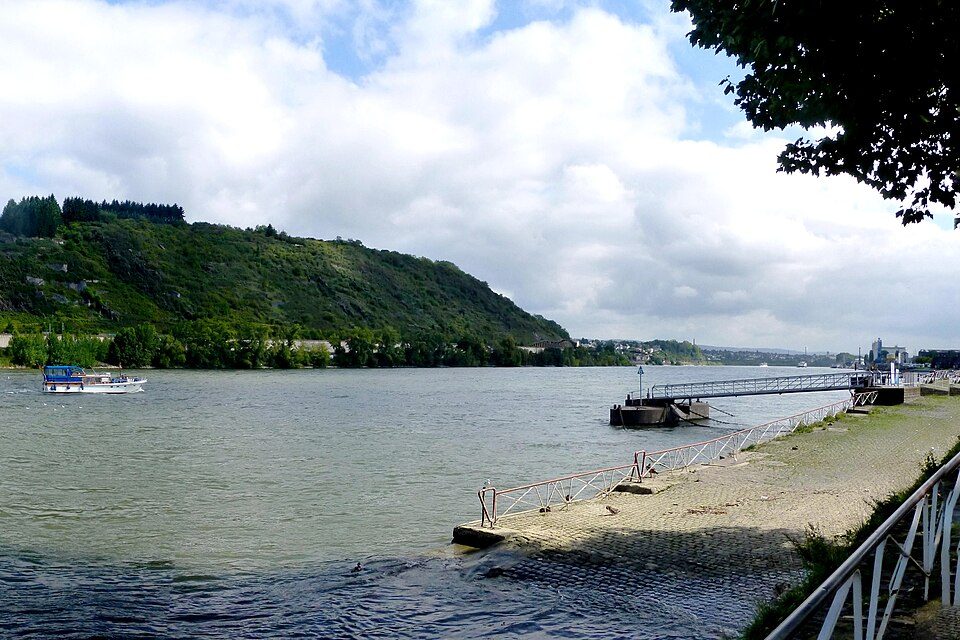
He was born Heinrich Karl Bukowski on August 16, 1920, in Andernach, a small town on the Rhine.
Andernach on the Rhine, where he was born. Photo: giggel, CC BY 3.0.
His father was an American soldier who had stayed on in Germany after the First World War; his mother was German. In April 1923 the family sailed from Bremerhaven to Baltimore, and by 1930 they had landed in Los Angeles. Heinrich became Henry, then Hank.
It was a brutal childhood. His father beat him with a razor strop, by his own account three times a week from about six to eleven. Severe acne scarred his face and cut him off from other kids, who mocked his accent and his clothes. A friend handed him his first drink in his early teens, and he later said that it was going to help him for a very long time. He graduated from Los Angeles High School in 1939 and spent two years at Los Angeles City College studying art, journalism and literature.
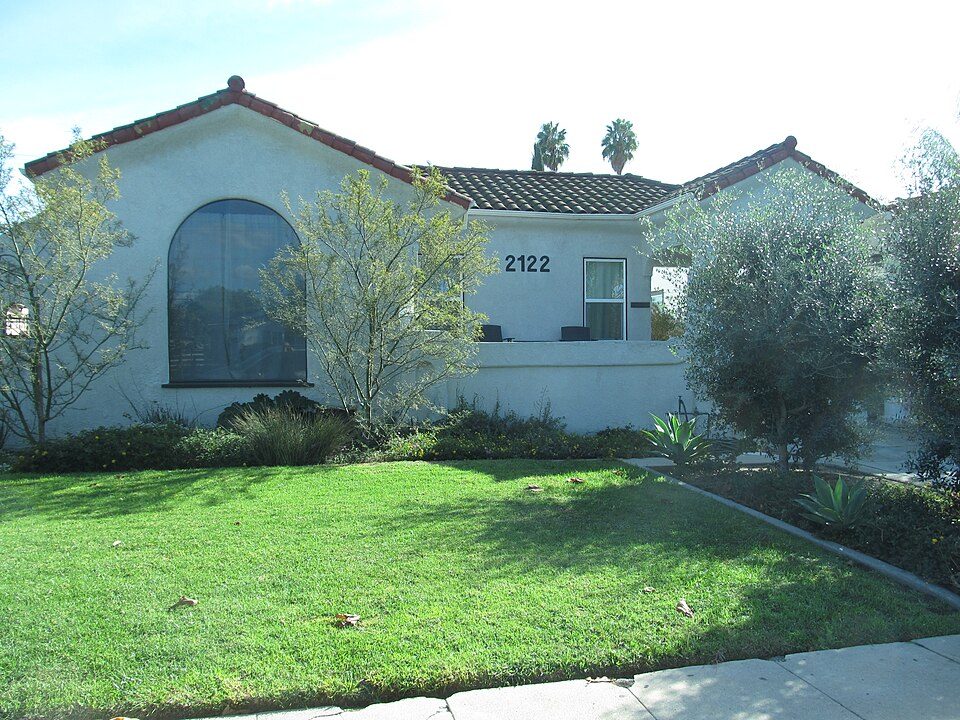
The Bukowski family house on Longwood Avenue, Los Angeles, where he grew up. Photo: Phatblackmama, CC BY-SA 4.0.
The ten-year drunk
At 24 he got a short story into Story magazine — “Aftermath of a Lengthy Rejection Slip,” 1944. Then he mostly quit writing. For roughly a decade he drifted through rooming houses, bars and dead-end jobs across the country, a stretch he called his “ten-year drunk.” In 1954 a bleeding ulcer nearly killed him. When he got out of the hospital, he started writing poems.
He married a Texas poet and editor, Barbara Frye, in 1955; it lasted until 1958. His first serious love, Jane Cooney Baker, died in 1962, and her death flooded into his work for years. His only child, Marina, was born in 1964.
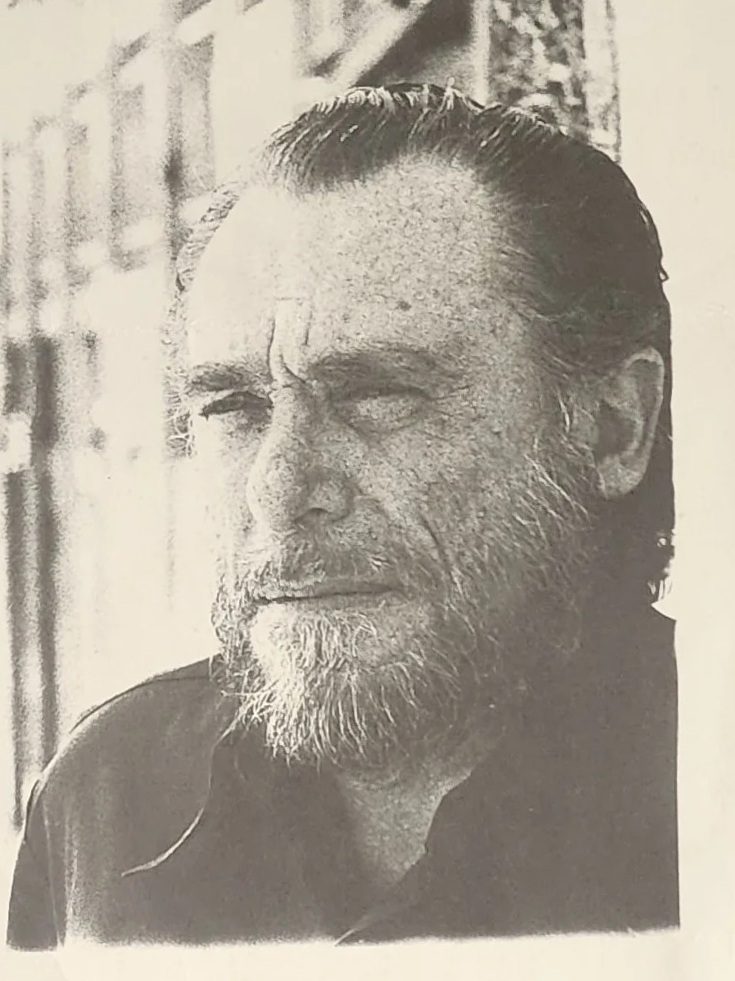
Charles Bukowski, about 1973 — two years after the little man. Photo: Richard Robinson, public domain.
The post office
Through much of the 1950s and ’60s he worked for the Los Angeles post office — first as a carrier, then as a filing clerk — writing poems at night and sending them to tiny mimeographed magazines. Small presses began printing his chapbooks in 1960; Loujon Press in New Orleans published It Catches My Heart in Its Hands (1963) and Crucifix in a Deathhand (1965). From 1967 he wrote the column “Notes of a Dirty Old Man” for the underground paper Open City — and the FBI started a file on him.
In 1969 a Los Angeles office-supply manager and book collector named John Martin offered Bukowski a small monthly check for life if he would quit the post office and write. He was 49. “I have one of two choices,” he wrote, “stay in the post office and go crazy … or stay out here and play at writer and starve. I have decided to starve.” Martin founded Black Sparrow Press to publish him, and Bukowski stayed loyal to it for the rest of his life.
His first novel, Post Office, came out in 1971 — written in less than a month. It introduced most of the world to Henry Chinaski, the alter ego who would narrate four more novels. (Chinaski had first appeared in a 1965 short story.) The same year Chinaski went out into the world as a novel, the little man came out of the clay at Linda’s house.
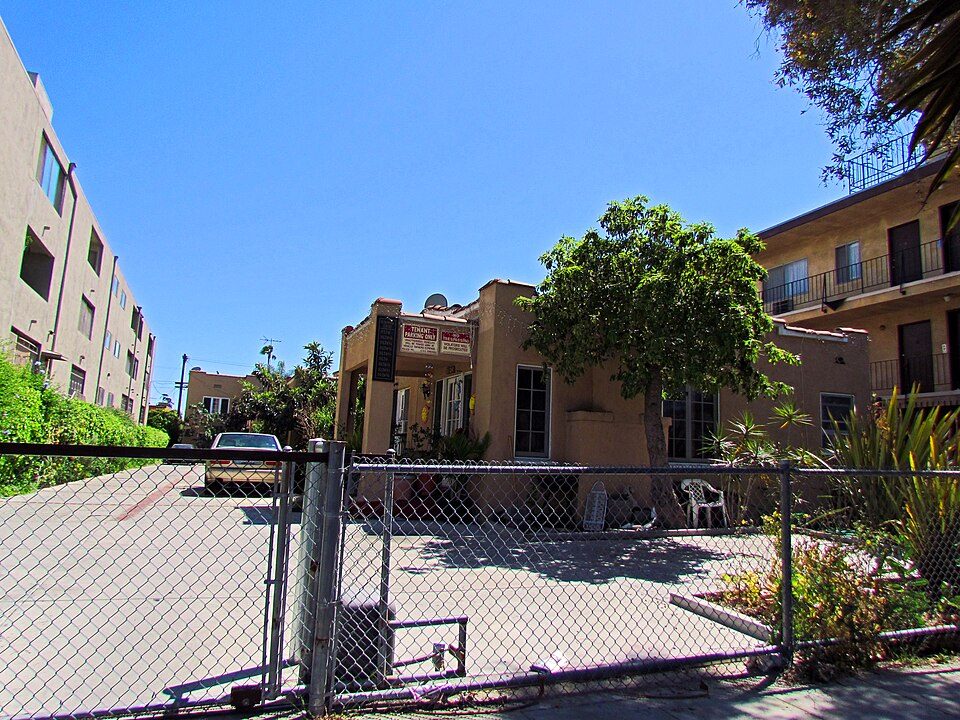
The bungalow court on De Longpre Avenue in East Hollywood, his home through the 1960s and early ’70s, where he wrote Post Office. It is now a Los Angeles Historic-Cultural Monument. Photo: Marika Bortolami, CC BY 2.0.
The rest of it
More than sixty books followed: Factotum (1975), Women (1978), Ham on Rye (1982), Hollywood (1989), Pulp (1994), and thousands of poems. Europe — Germany above all — embraced him long before American critics did. In 1978 he left East Hollywood for San Pedro, and in 1985 he married Linda Lee Beighle. The 1987 film Barfly, which he wrote, put Mickey Rourke in Chinaski’s shoes.
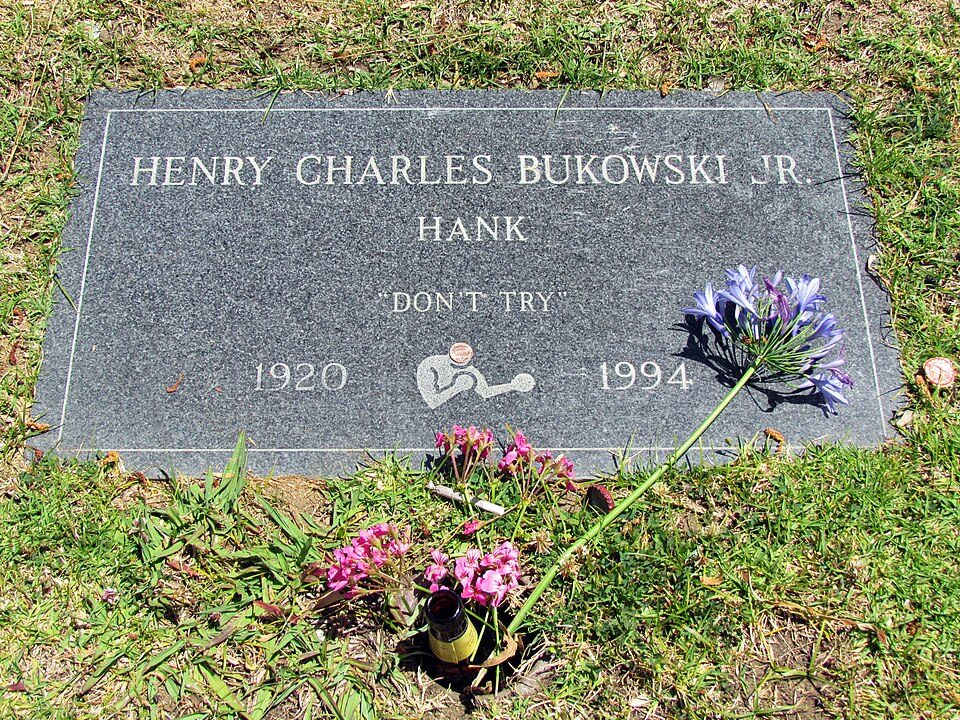
Charles Bukowski died of leukemia in San Pedro on March 9, 1994, at 73, just after finishing Pulp. His gravestone at Green Hills Memorial Park says: Don’t Try. He explained what he meant in a 1963 letter — you don’t try for Cadillacs, creation or immortality; you wait, and if nothing happens, you wait some more.
Green Hills Memorial Park, Rancho Palos Verdes. HENRY CHARLES BUKOWSKI JR. · HANK · DON’T TRY · 1920–1994. Photo: Marika Bortolami, CC BY 2.0.
1940Boulder, Utah → Los Angeles
Linda
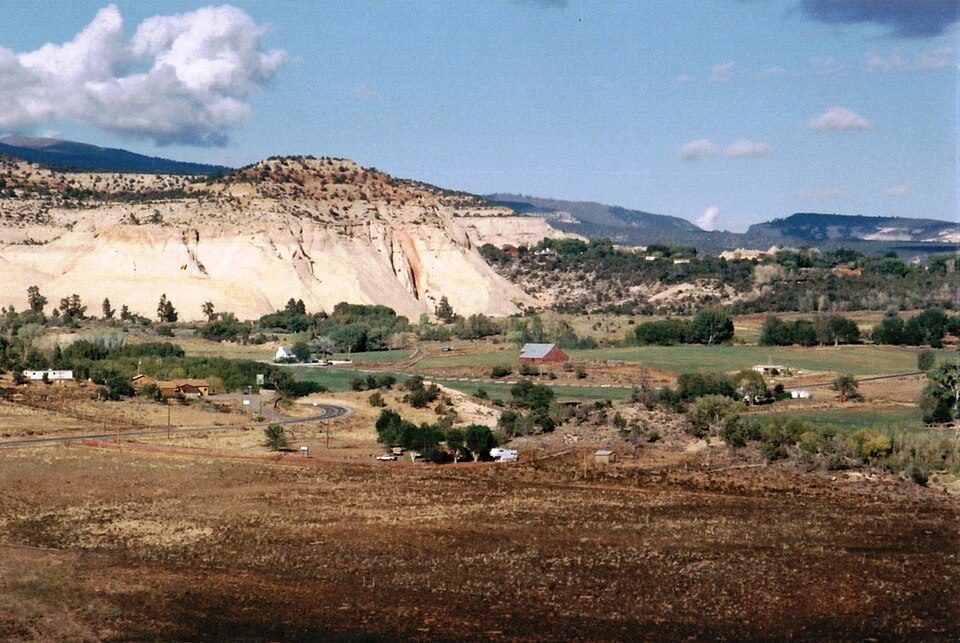
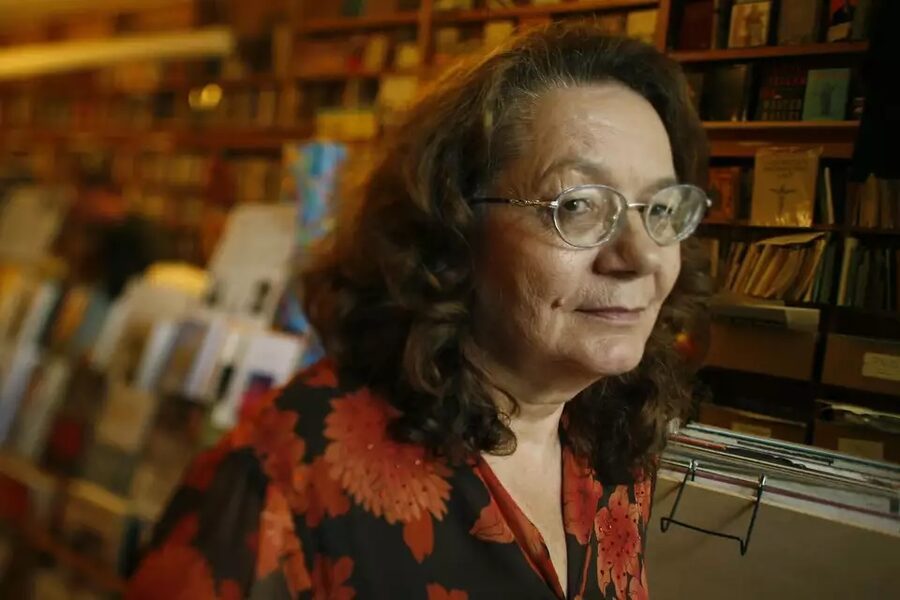
Linda King was born in 1940 and grew up in Boulder, Utah — a ranching town in the red-rock country of the south, about as far from Hollywood as a place can get.
Boulder, Utah, where Linda King grew up. Photo: A.E. Crane.
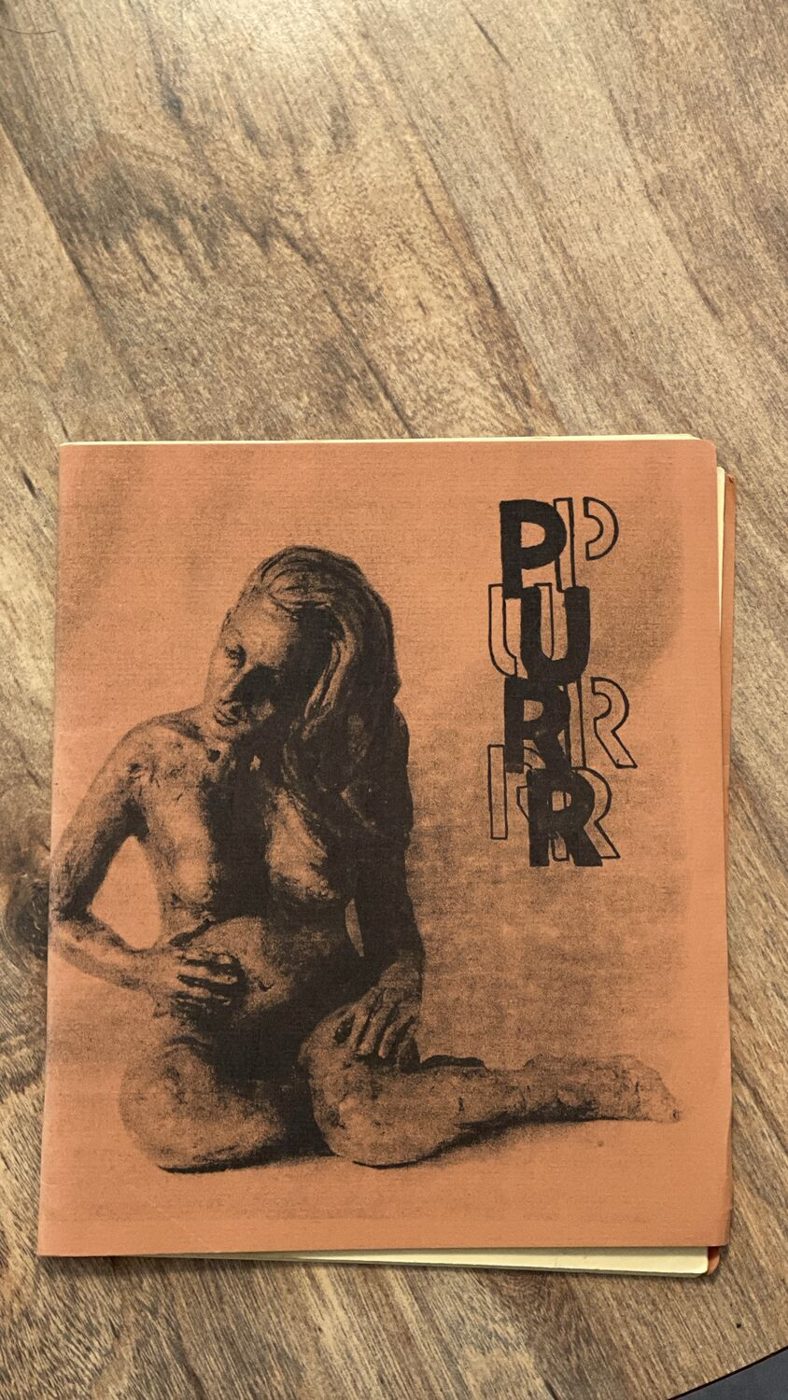
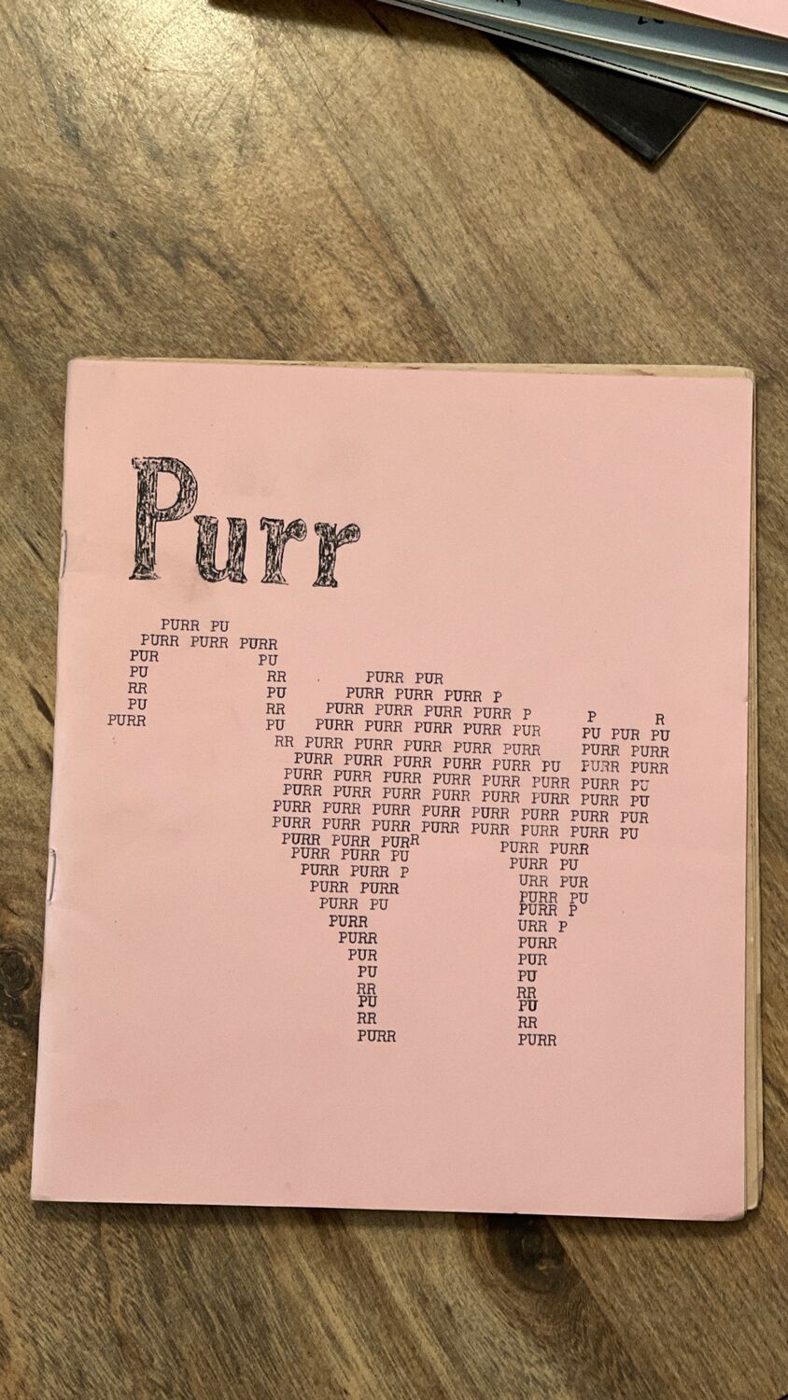
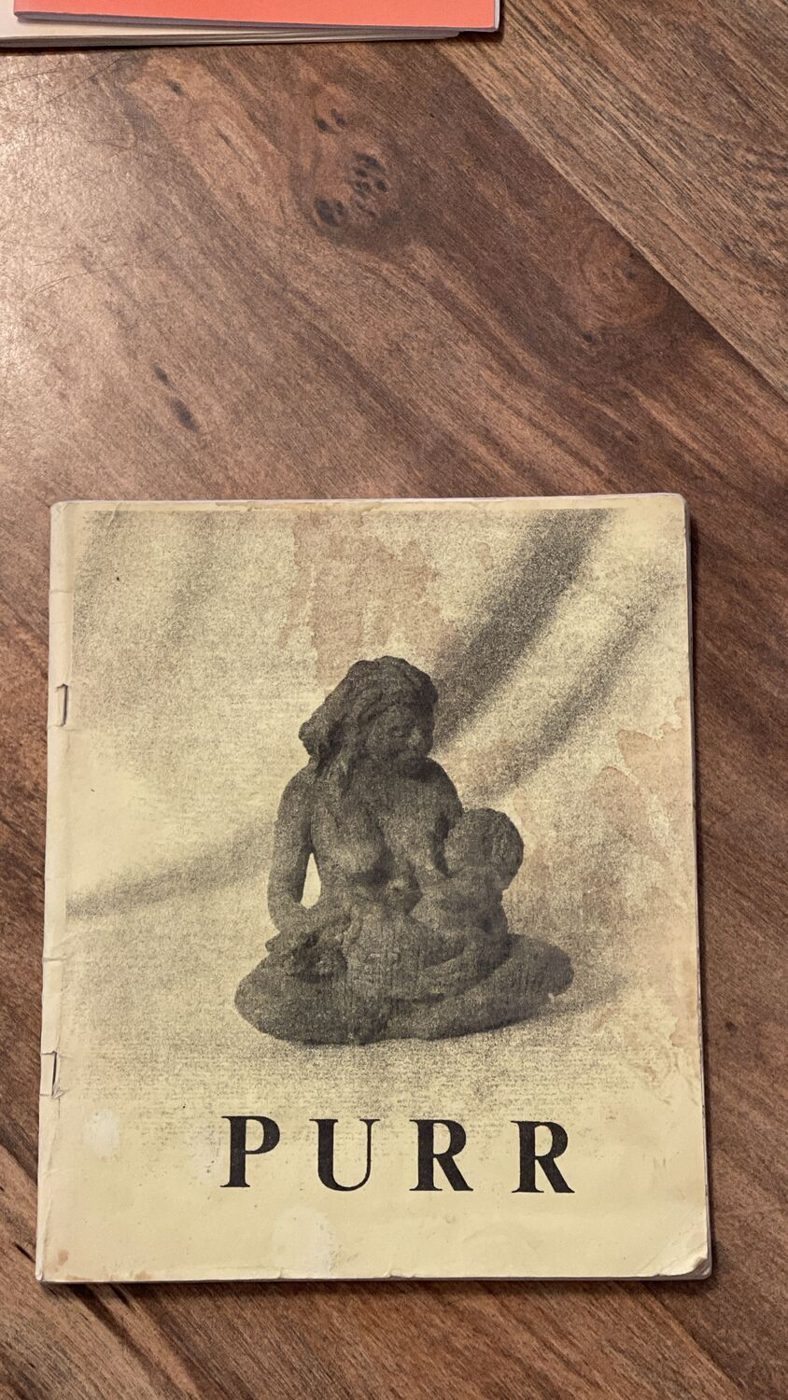
She married young and had two children; the marriage ended after ten years. By the late 1960s she was in Los Angeles — writing poems, acting, publishing her own little literary magazine, Purr, and sculpting. She had set herself a project: to model the heads of poets from life.
Purr, Linda King’s magazine.Purr.Purr.
In 1970 she went to hear Charles Bukowski read at a Los Angeles venue called The Bridge.
“After the reading I said to him, ‘You don’t seem [to] like women much.’ He said, ‘I love women.’”Linda King, on meeting Bukowski
She was 30. He was nearly twenty years older, just out of the post office, about to become famous. She asked whether she could sculpt his head. He said yes.
Linda King. From lindakingarts.com.
1970East Hollywood 1970–1975
The head, and the five years
The sittings went on for about two months. As they went, Bukowski lost weight, and Linda kept having to take clay off the face to keep up with him. By the time the head was done, so was the distance between them. They became lovers.
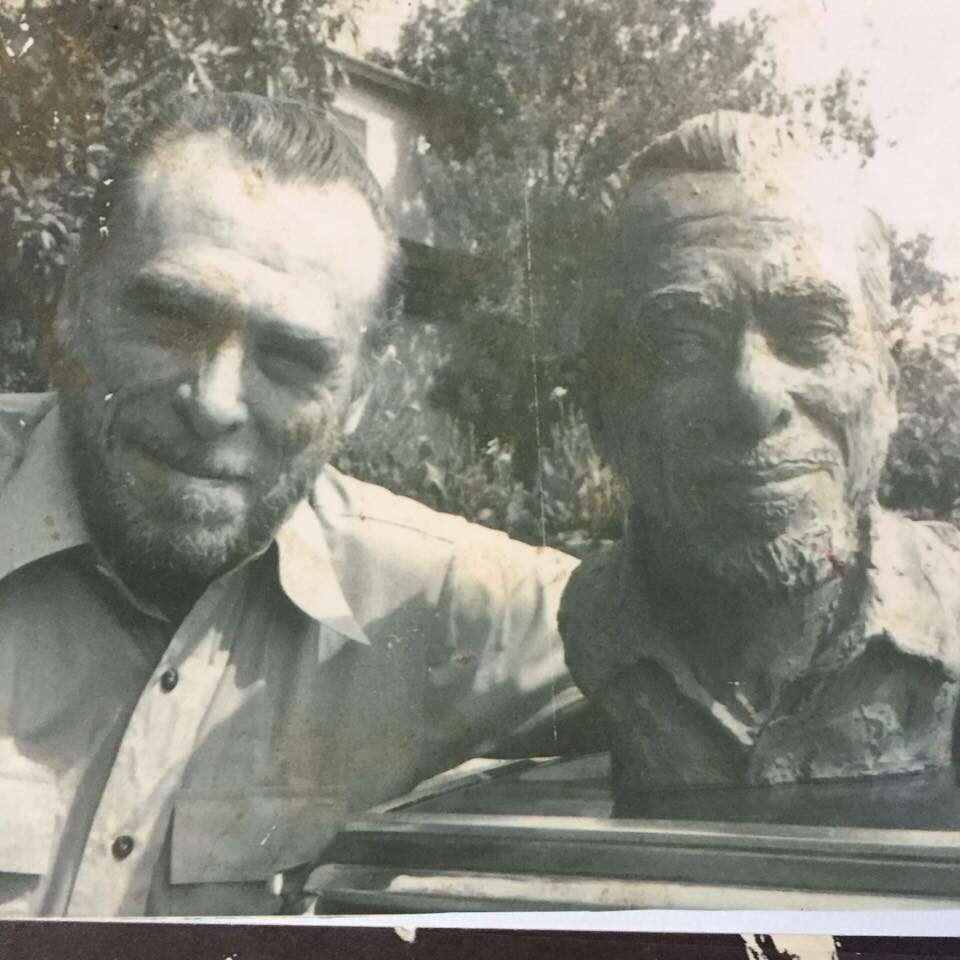
Bukowski beside the head Linda King made of him — the man and his clay double. From Linda King’s archive.
It lasted five years, on and off, and nobody who was there calls it gentle. They were two poets with tempers, a lot of liquor and not much patience. He was unfaithful and made sure she knew it; she fought back. There were broken doors and broken glass, and at least once real violence. They split and reunited again and again.
The bust became the barometer. Whenever they broke up, Bukowski would haul the clay head back to her place and leave it on her doorstep. Four or five times, by her count, his own face came home to her. In the end, she kept it.
“When we were in love, we were madly in love. It was mad on both ends.”Linda King
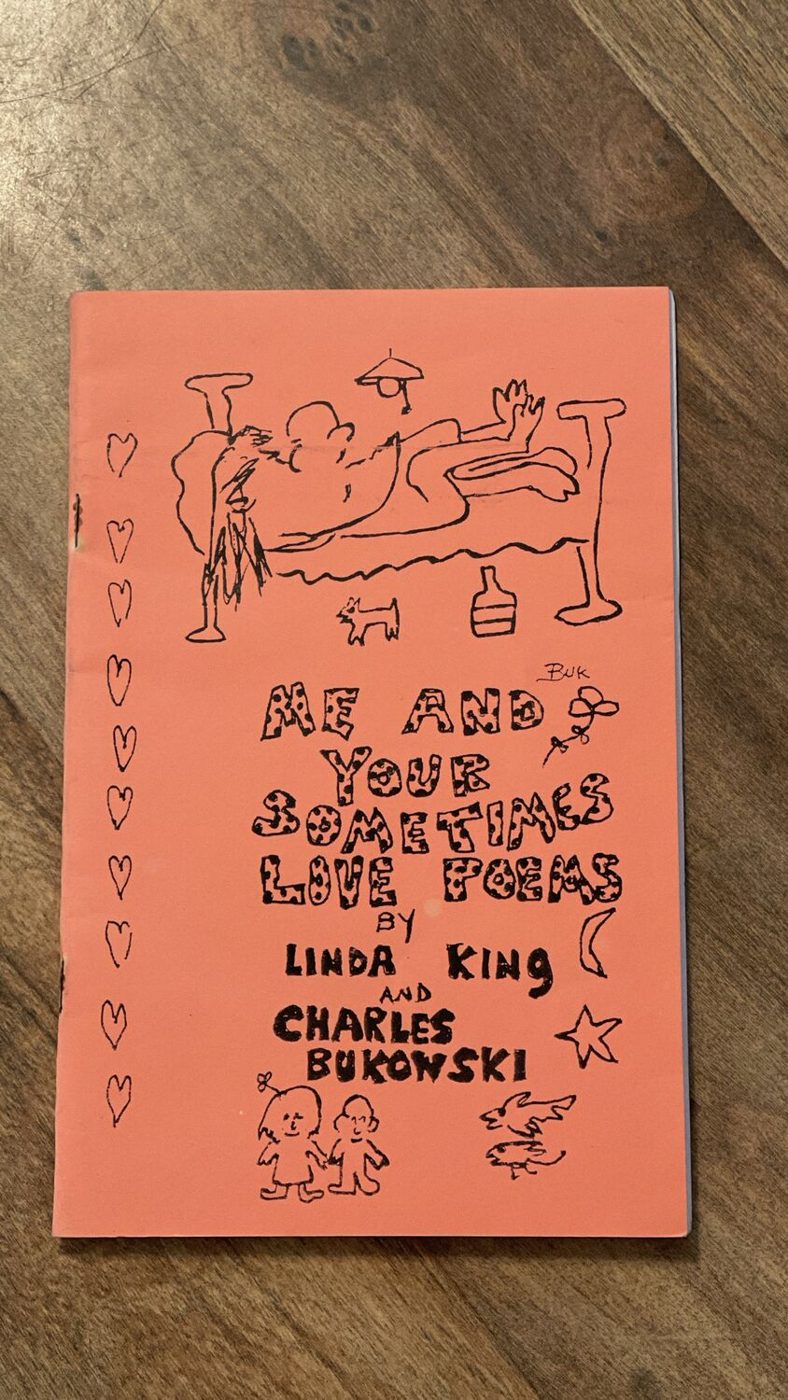
He wrote her dozens of love letters — around sixty survive, from 1970 to 1972. In 1972 he dedicated a book of poems, Mockingbird Wish Me Luck, to her. He later called her one of the great loves of his life. They even made a chapbook together, Me and Your Sometimes Love Poems — her poems and his, back to back, decorated with his little drawings.
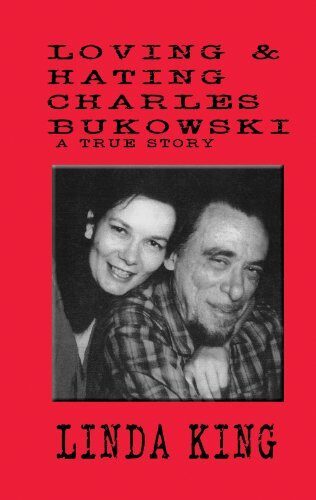
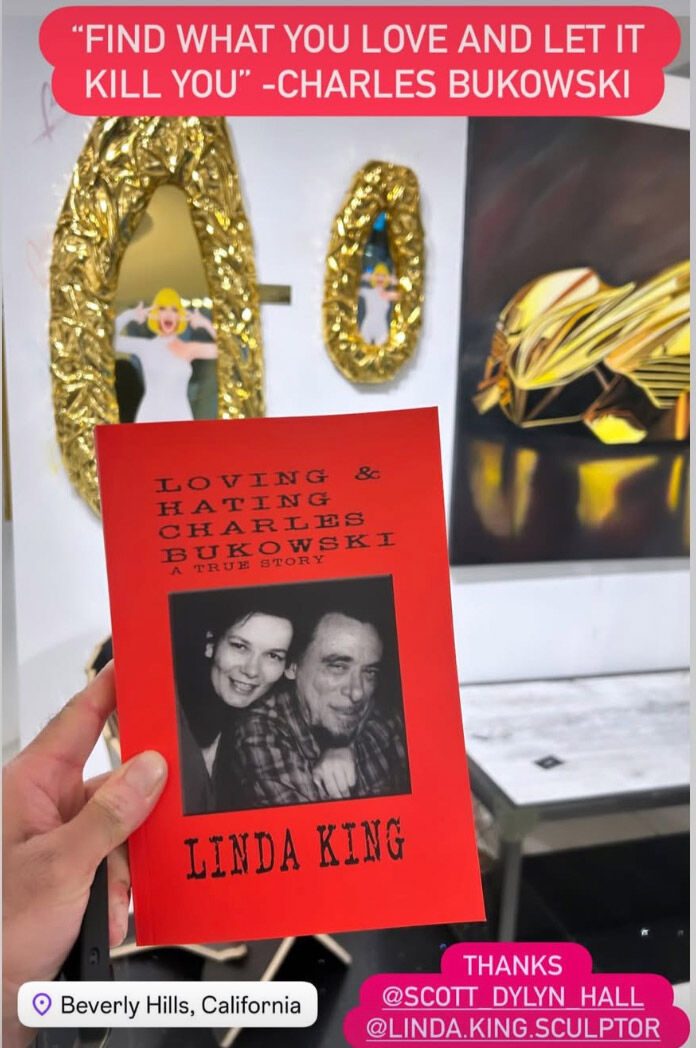
Me and Your Sometimes Love Poems, by Linda King and Charles Bukowski. Note the little man on the cover.Loving and Hating Charles Bukowski, Linda King’s memoir.
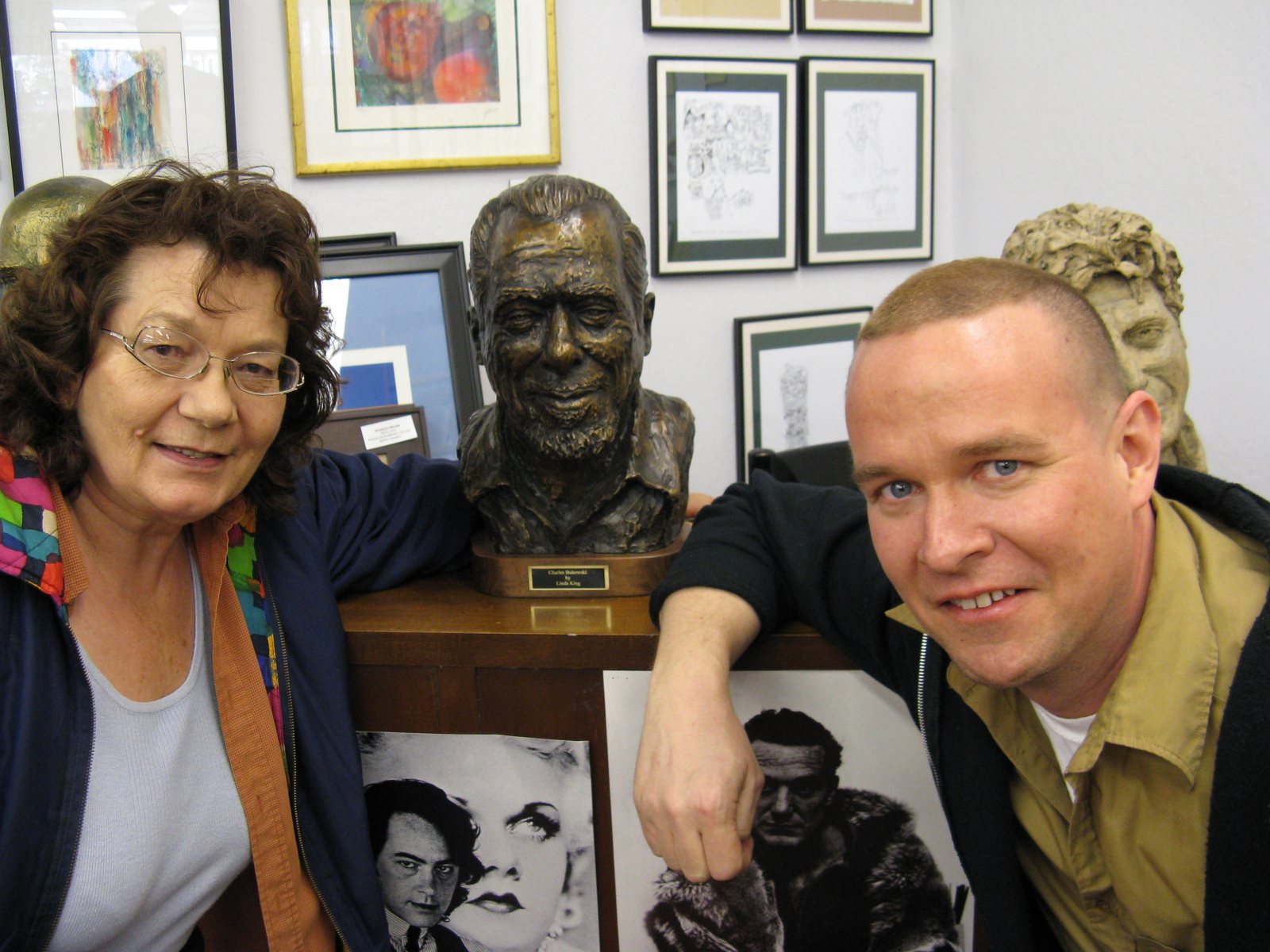
Linda King and Matt Sesow with her bronze of Bukowski’s head. San Francisco, April 19, 2008.
Lydia Vance
They broke for good in 1975. Three years later Bukowski published Women, and it opens with her: Henry Chinaski, 50 years old, meets Lydia Vance, a sculptor who wants to model his head. Lydia is Linda, thinly disguised. Millions of readers came to know her through his version of events.
“It wasn’t that he had other women. It’s that he always wanted me to know about them.”Linda King
She spent more than three decades writing her side. Loving and Hating Charles Bukowski, her memoir — letters, poems and all — was published by Wild Ocean Press in San Francisco. “We were completely in love there for a while,” she said when it came out. “That’s the story. That’s the book.”
Twosculptures don’t mix them up
A head of him. A man by him.
People confuse these two all the time. They came out of the same house, the same clay and the same fight, but they are opposites: one is Bukowski seen by Linda, the other is Bukowski seen by Bukowski.
A sculpture of Bukowski
The head
Modeled from life by Linda King in 1970 over roughly two months of sittings. A realist portrait, weathered and grinning. Cast in a bronze edition of at least fifteen.
Maker
Linda King
Made
1970, from life
Plate
Charles Bukowski / by Linda King
A sculpture by Bukowski
The little man
Mashed out of clay by Bukowski himself on one drunk night in 1971, saved from his own hangover by Linda. Rough, abstract, alive. Two bronzes cast.
Maker
Charles Bukowski
Made
1971, one night
Plate
CHANISKI / By Charles Bukowski
The little man
For decades Bukowski signed his books, letters and drawings with a tiny cartoon of himself: a stubby, big-nosed, disheveled figure, often with a bottle or a flask. Collectors call him the little man. He was Hank’s mark, the way a rabbit or a one-winged bird might be another artist’s. When a later plaster casting of this sculpture came up for auction at PBA Galleries in San Francisco in 2017, it was described as an abstract rendering of that little-man figure, and as Bukowski’s sole attempt at sculpture.
Most of the little-man drawings collectors know date from the mid-1970s on. If the 1971 date holds, this lump of clay-turned-bronze may be the earliest time Bukowski made his alter ego into a standalone object — and very likely the only time he ever made it in three dimensions.
C-H-A-N-I-S-K-I
Bukowski’s alter ego is spelled Chinaski. The brass plate on this base says CHANISKI. Somebody at the engraver’s counter transposed two letters, and nobody ever fixed it. It is the kind of mistake that makes an object more itself — handmade and unbothered, like everything else in this story. The title stays exactly as the plate has it.
The Germans, and the bronzes
Bukowski was always bigger in Germany than at home; the country of his birth read him in translation long before American professors did. So it makes sense that two German collectors turned up at Linda’s door wanting the clay figure. Linda made them a deal: pay for a bronze, and the clay could go. Two bronzes were cast. The fragile clay original went to Germany. The bronzes stayed with Linda. One of them is the piece on this page.
1night to make it
1survivor of the morning-after purge — the Medusa broke
2bronzes cast from the clay
10fingers’ worth of prints, frozen in metal
1975Phoenix → San Francisco
After Hank
In 1975 Linda left Los Angeles for Phoenix. She called that time one extended nervous breakdown. She stayed more than thirty years, living in the Oakland neighborhood and working as a bartender, a waitress and a caregiver for the elderly, raising her son Scott and never stopping work in the clay.
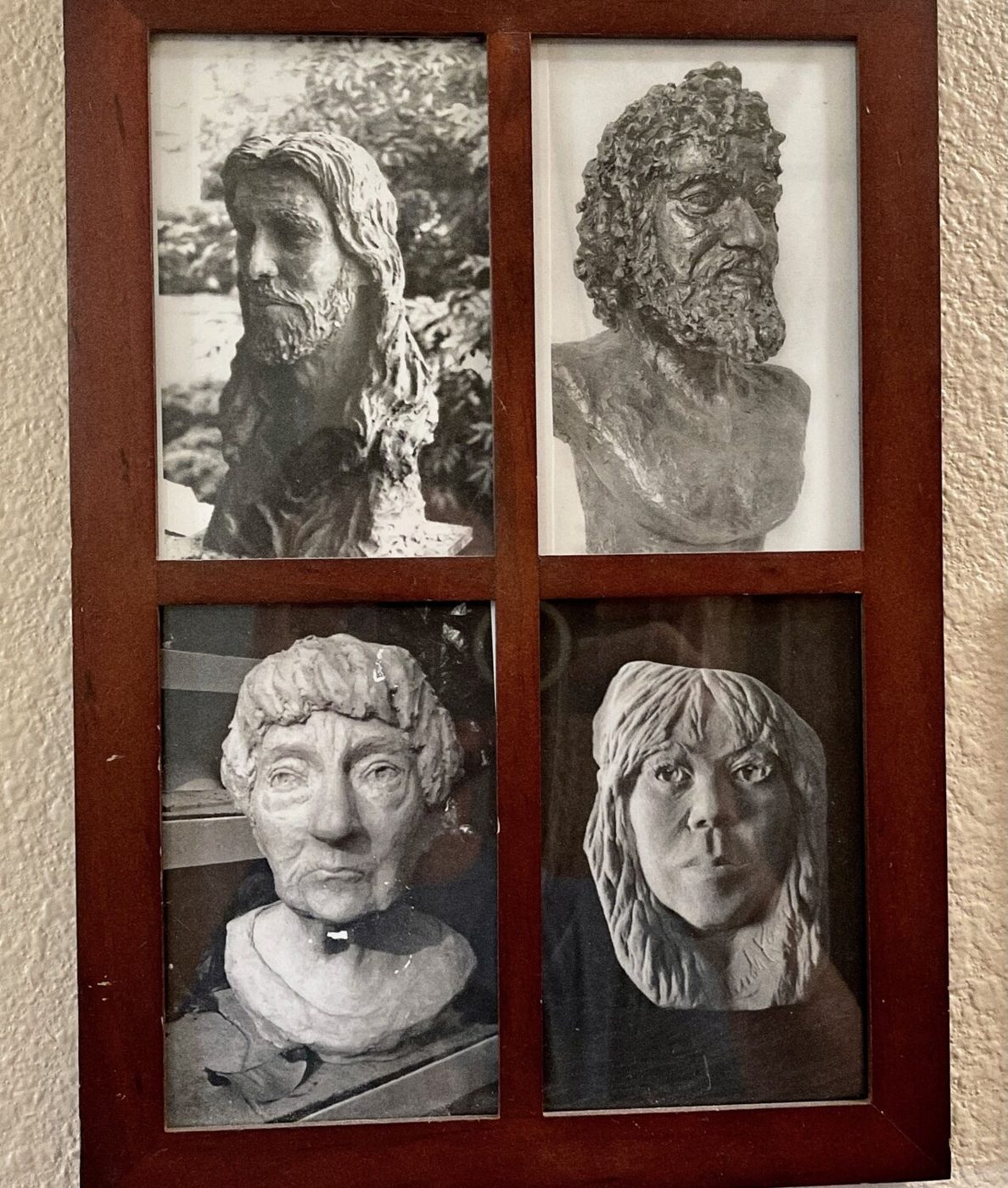
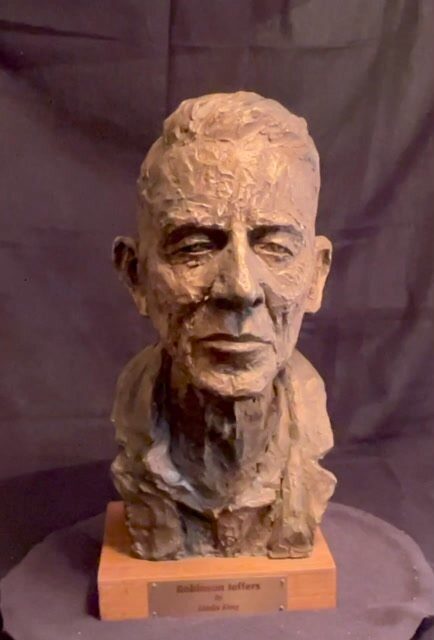
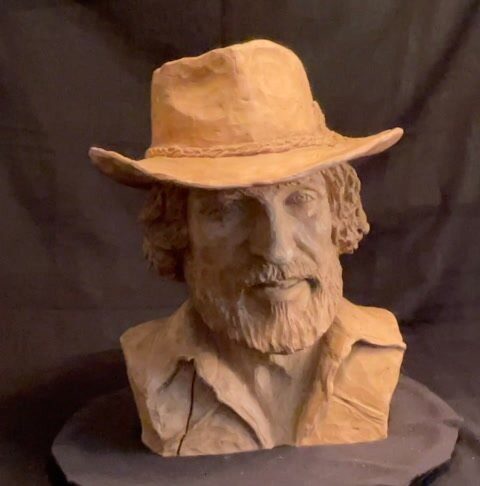
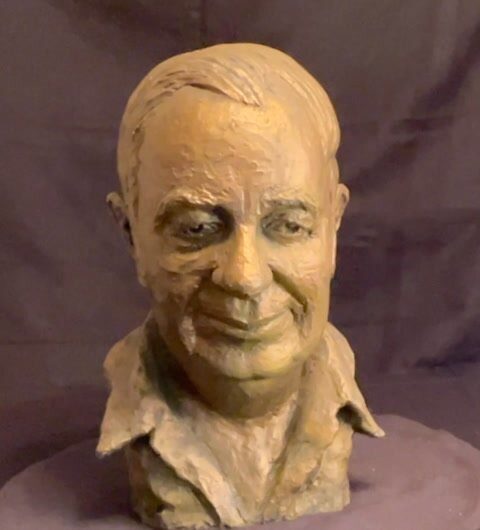
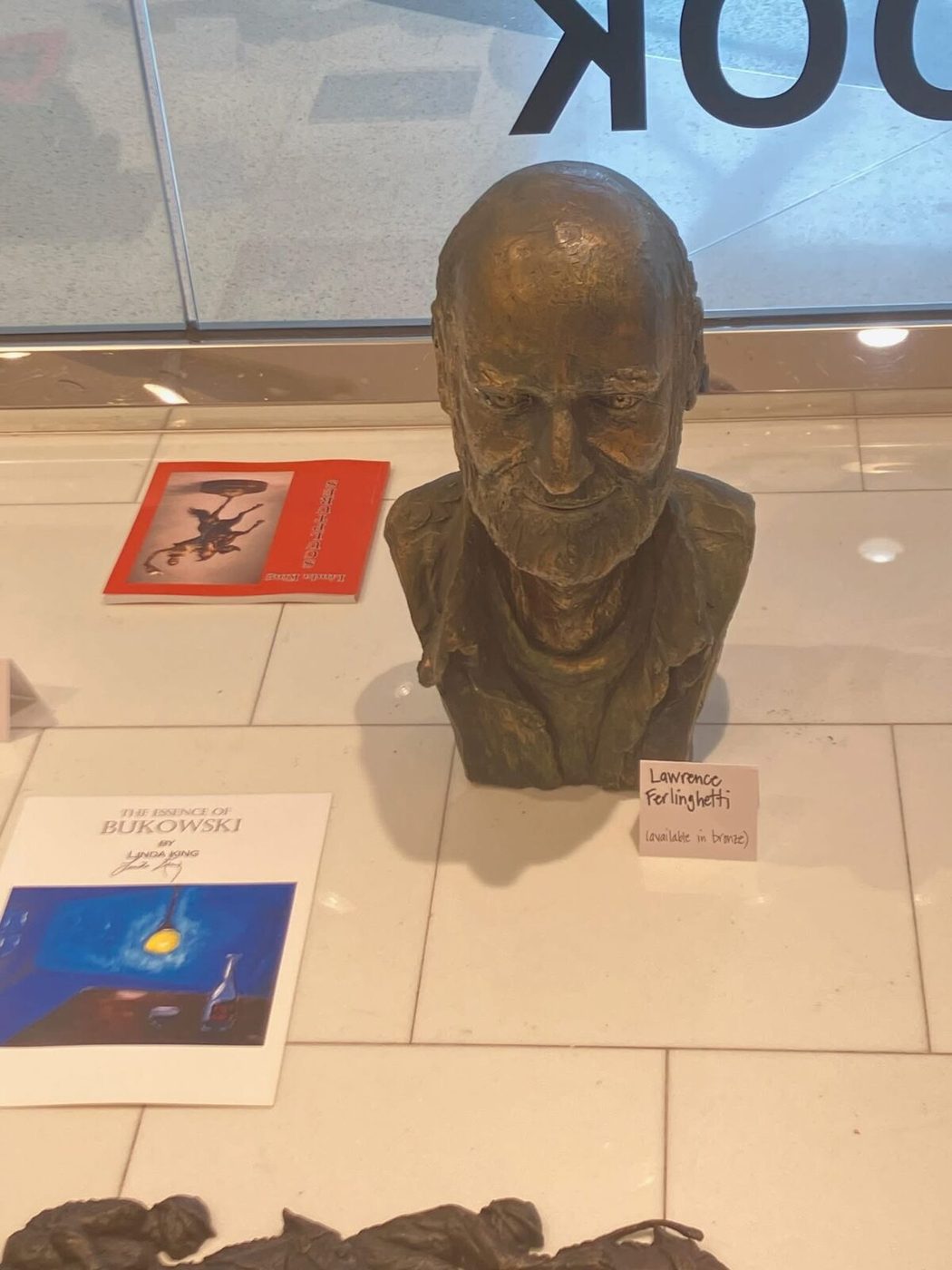
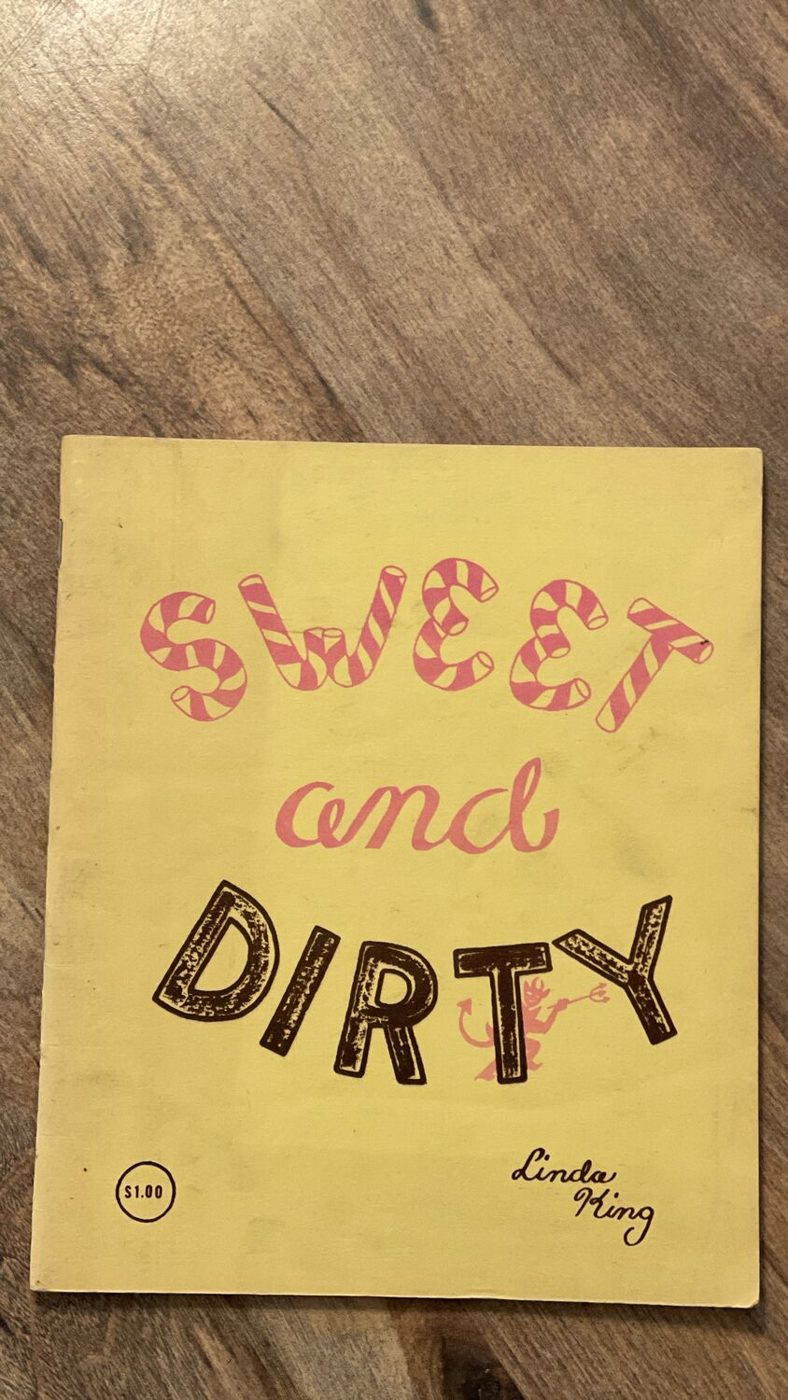
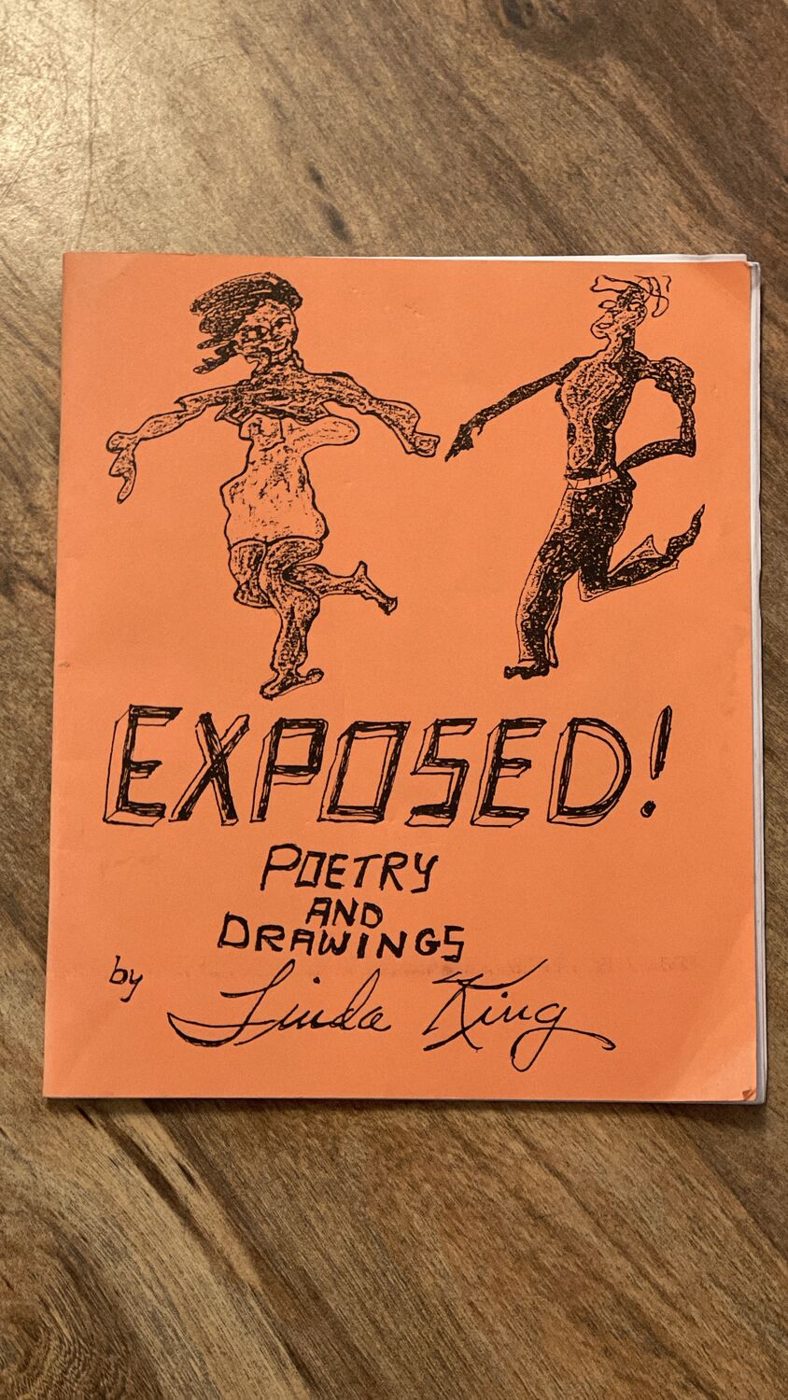
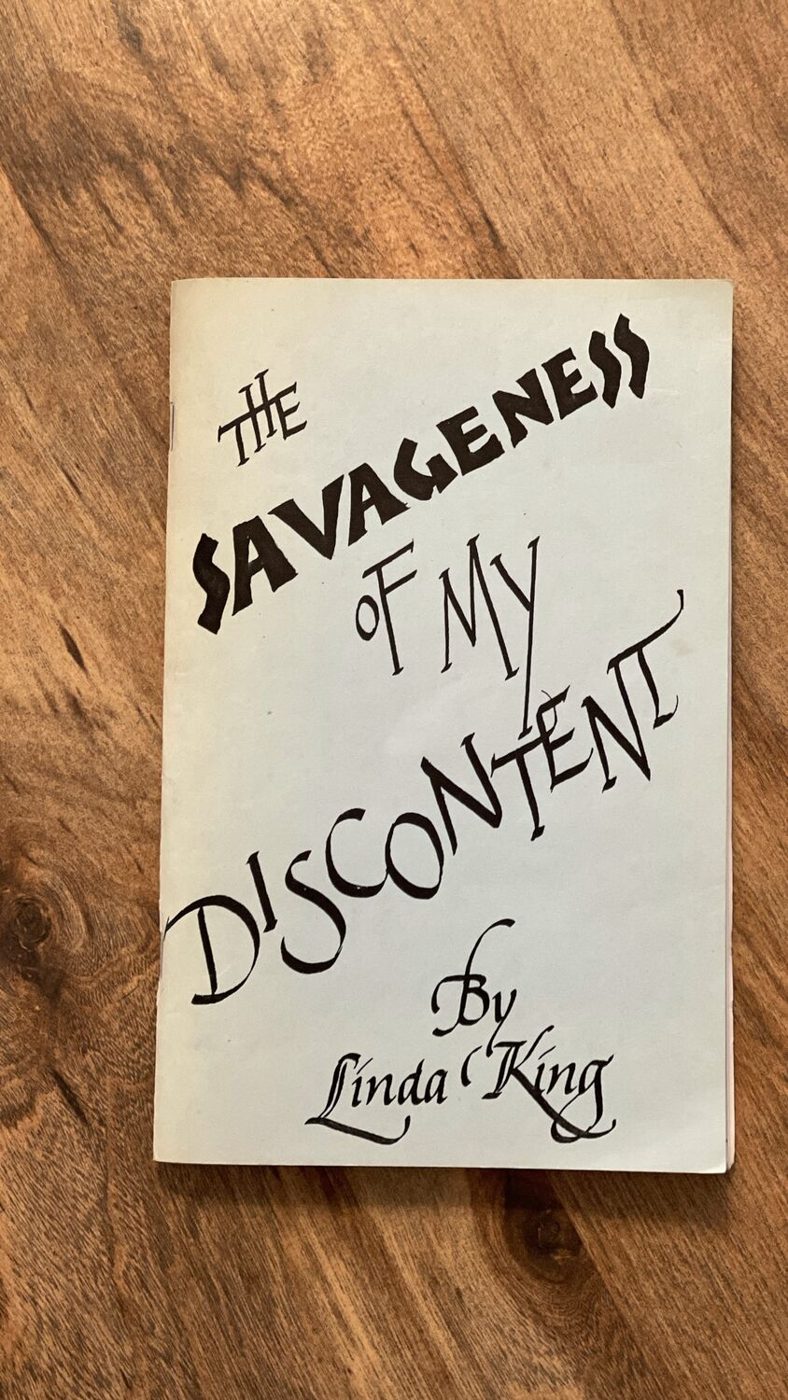
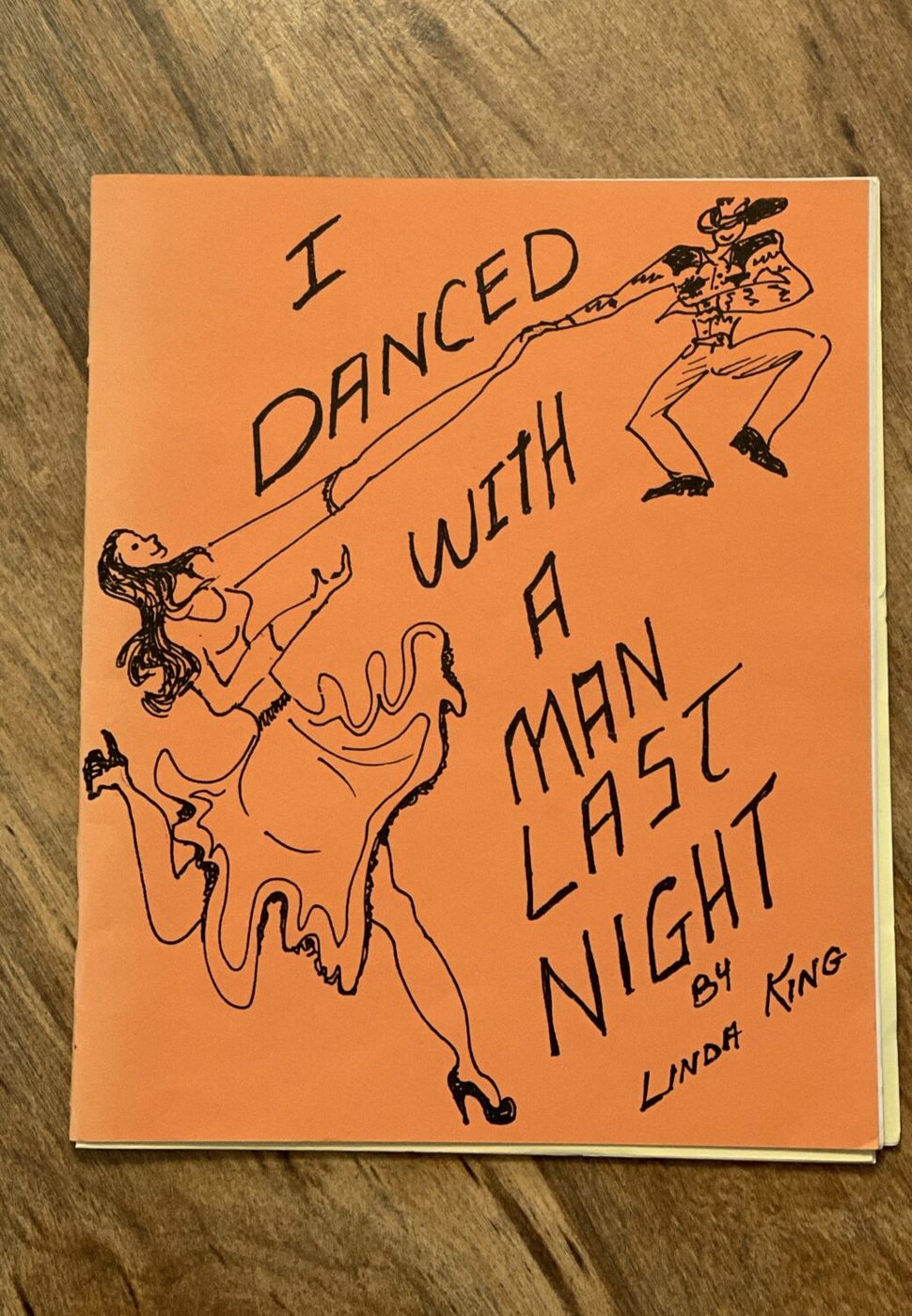
She kept making poets. Her heads of Lawrence Ferlinghetti, Jack Hirschman, Jack Micheline, Harold Norse, A.D. Winans, Neeli Cherkovski — Bukowski’s first biographer — and Robinson Jeffers read like a roll call of West Coast poetry. (Micheline, the old Beat street poet, simply showed up at her door in Phoenix one day.) She kept writing too: Sweet and Dirty, Exposed, The Elephant Chronicles, The Savageness of My Discontent, I Danced With a Man Last Night and more.
Poets in clay, photographed in Linda’s studio.A head from Linda King’s studio.A head from Linda King’s studio.A head from Linda King’s studio.Her bronze of Lawrence Ferlinghetti, shown in Los Angeles, June 2026.Her head of Jack Hirschman.
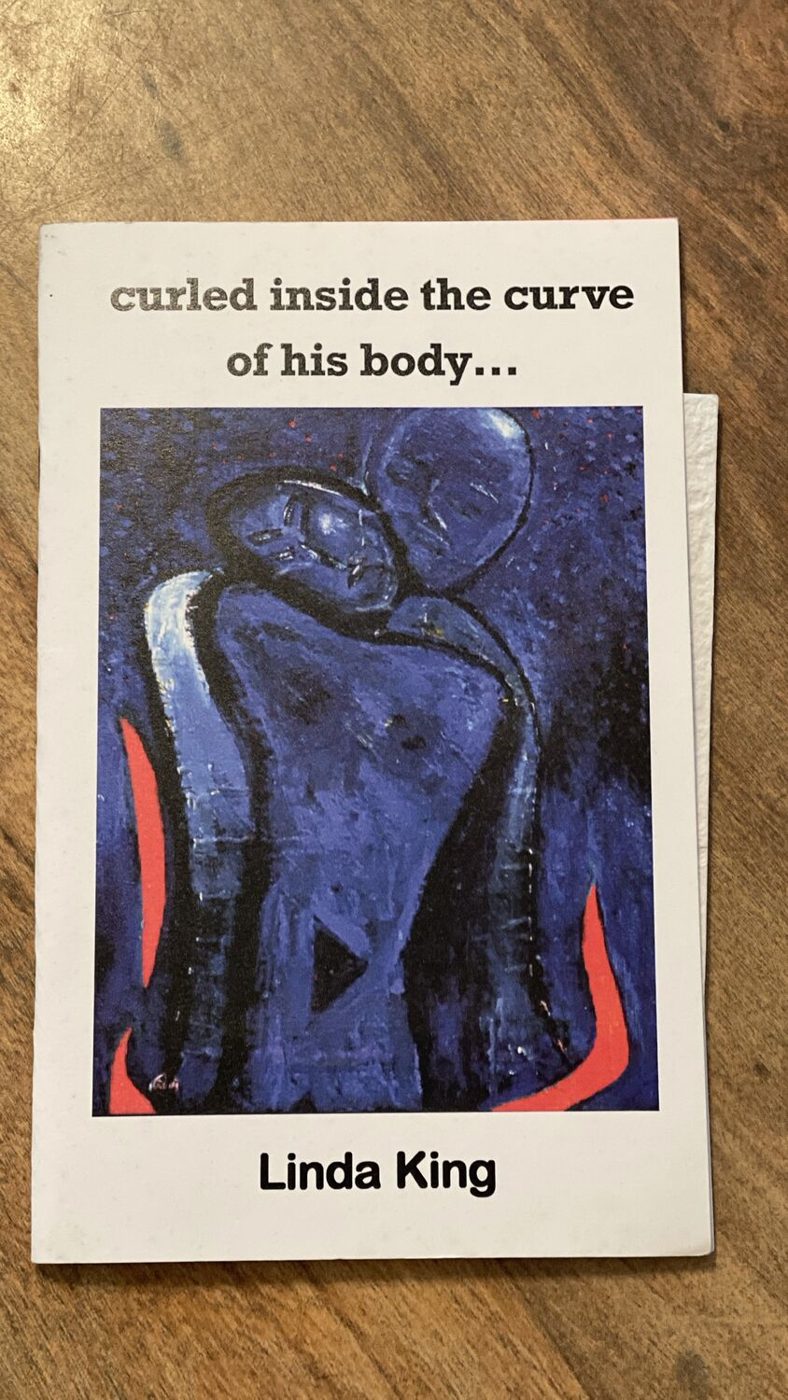
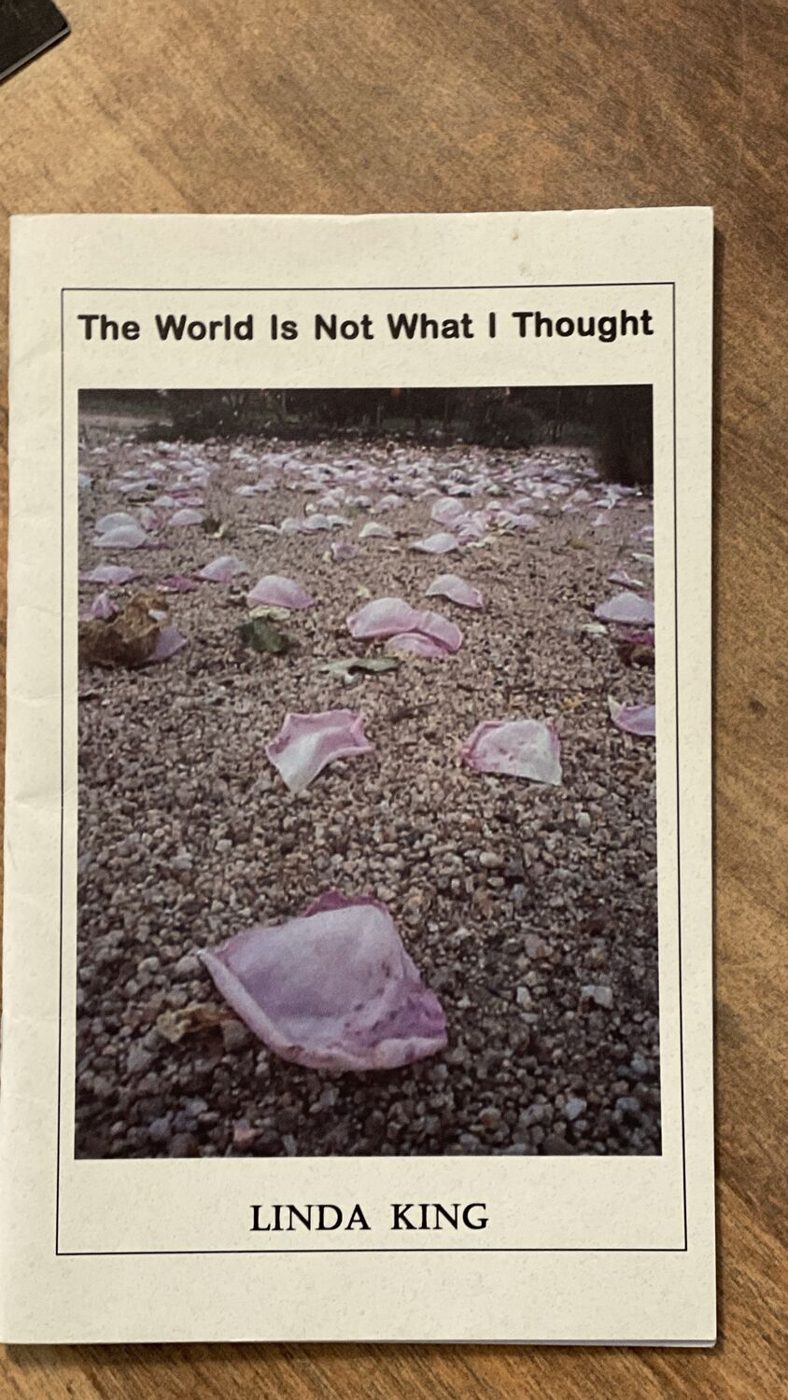
Sweet and DirtyExposed!The Savageness of My DiscontentI Danced With a Man Last NightCurled Inside the Curve of His Body…The World Is Not What I Thought
In 2004 a Phoenix gallery, Paper Heart, gave her a show called “Friends and Foes of Charles Bukowski.” In 2009 she sold her Bukowski love letters at auction in San Francisco and moved to the city’s Sunset District to be near her grandchildren. Her head of Jack Hirschman was unveiled at The Beat Museum in 2010.
2005Phoenix · San Francisco Los Angeles
The painter
Matt Sesow met Linda King because of a painting.
In 2005, in Phoenix, Linda’s nephew Raymond King Shurtz — a musician and theater producer — built a Cheap Theatrix show around Sesow’s Collateral Damage (Living Hell), an eight-by-nine-foot canvas. Ten playwrights each wrote a piece in response to it. One of them was Linda King. Raymond introduced them.
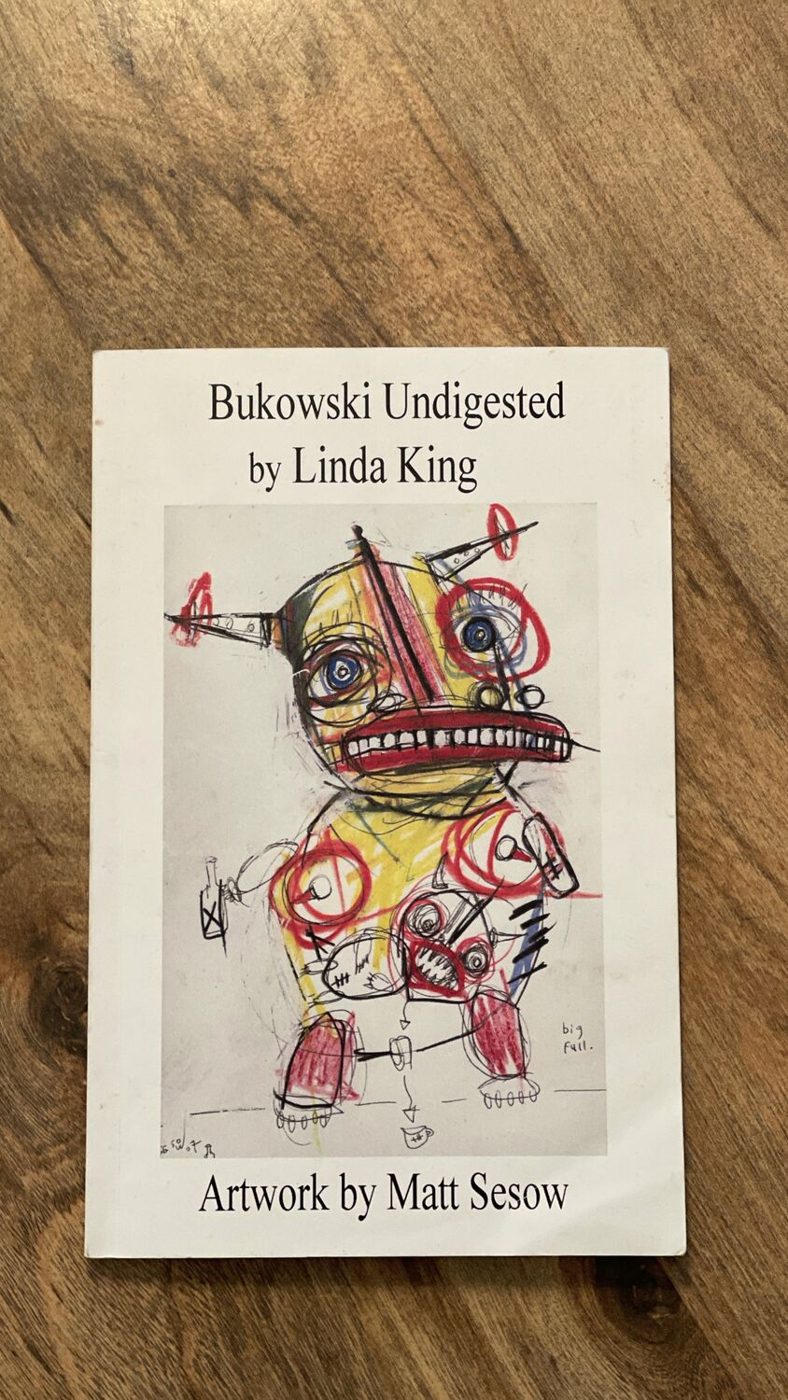
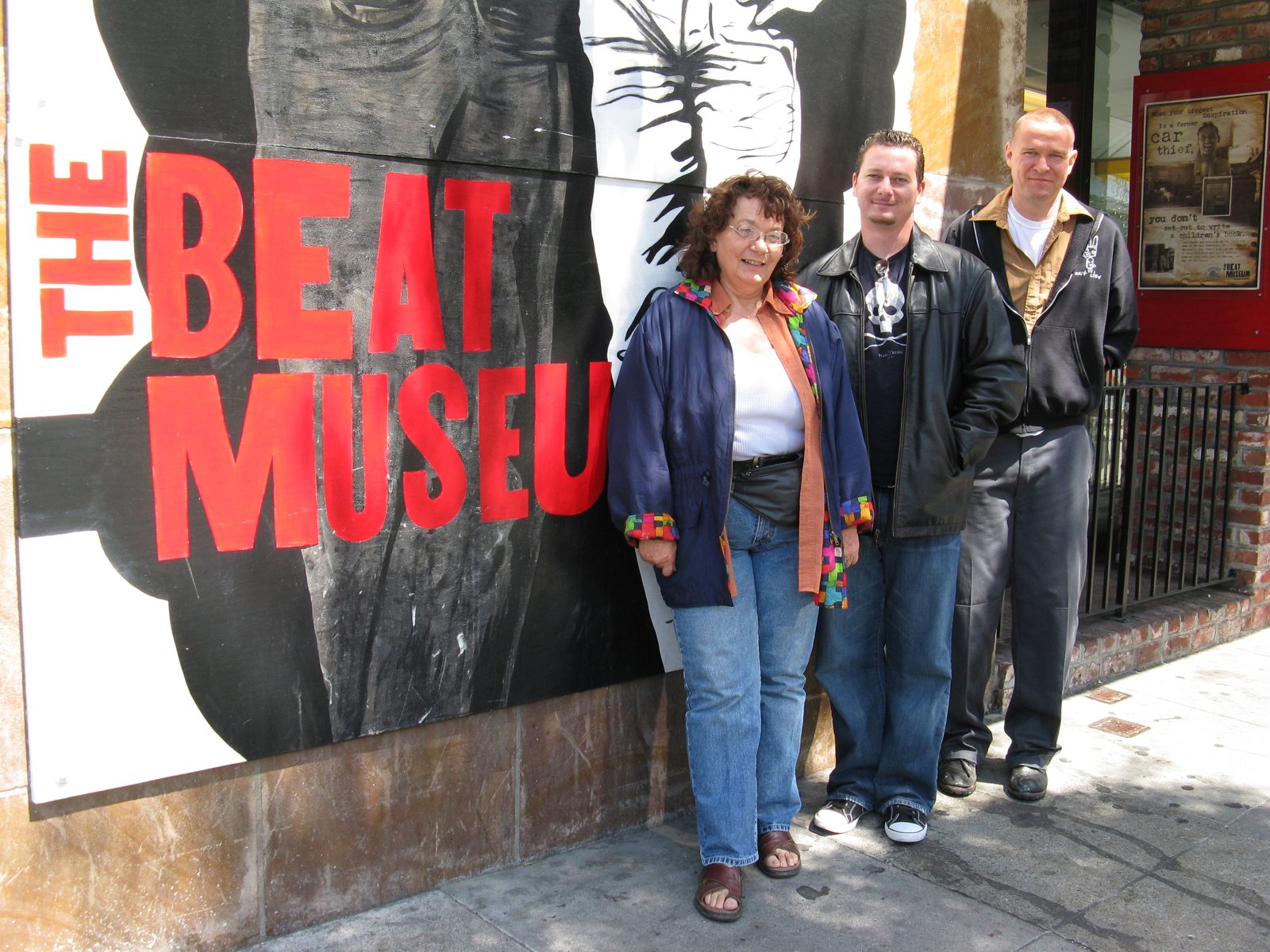
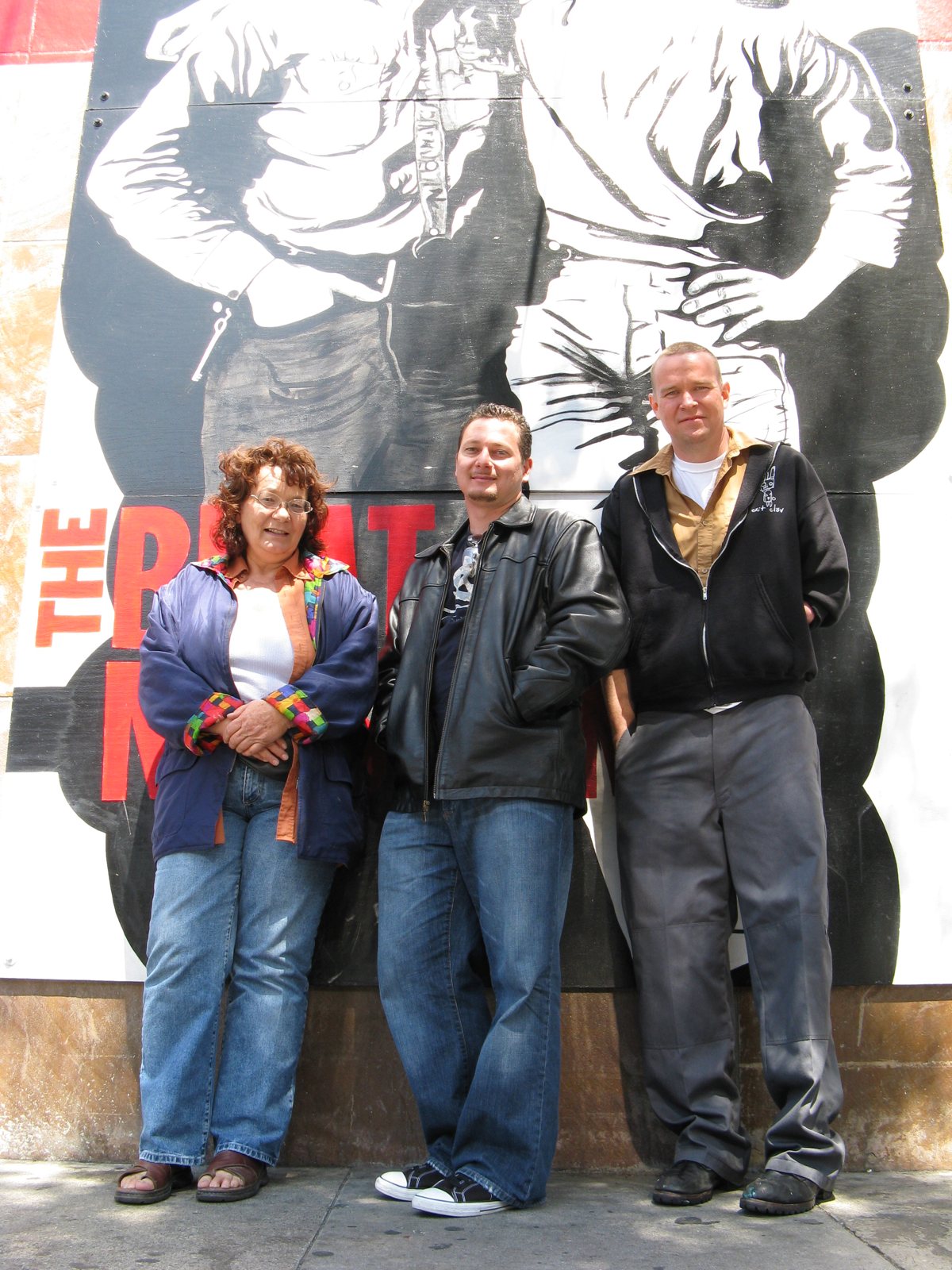
Three years later Sesow illustrated her poetry collection Bukowski Undigested: a full-color painting for every poem. The first printing came out on April 19, 2008, at The Beat Museum in San Francisco. Every photograph on this page from 2008 was taken that weekend.
Bukowski Undigested by Linda King, with artwork by Matt Sesow (2008).
That same afternoon, Sesow was photographed holding the little bronze.
Linda King (left) and Matt Sesow (right) outside The Beat Museum on launch day for Bukowski Undigested. April 19, 2008.Sesow with CHANISKI, April 19, 2008.Under the mural, The Beat Museum, North Beach.
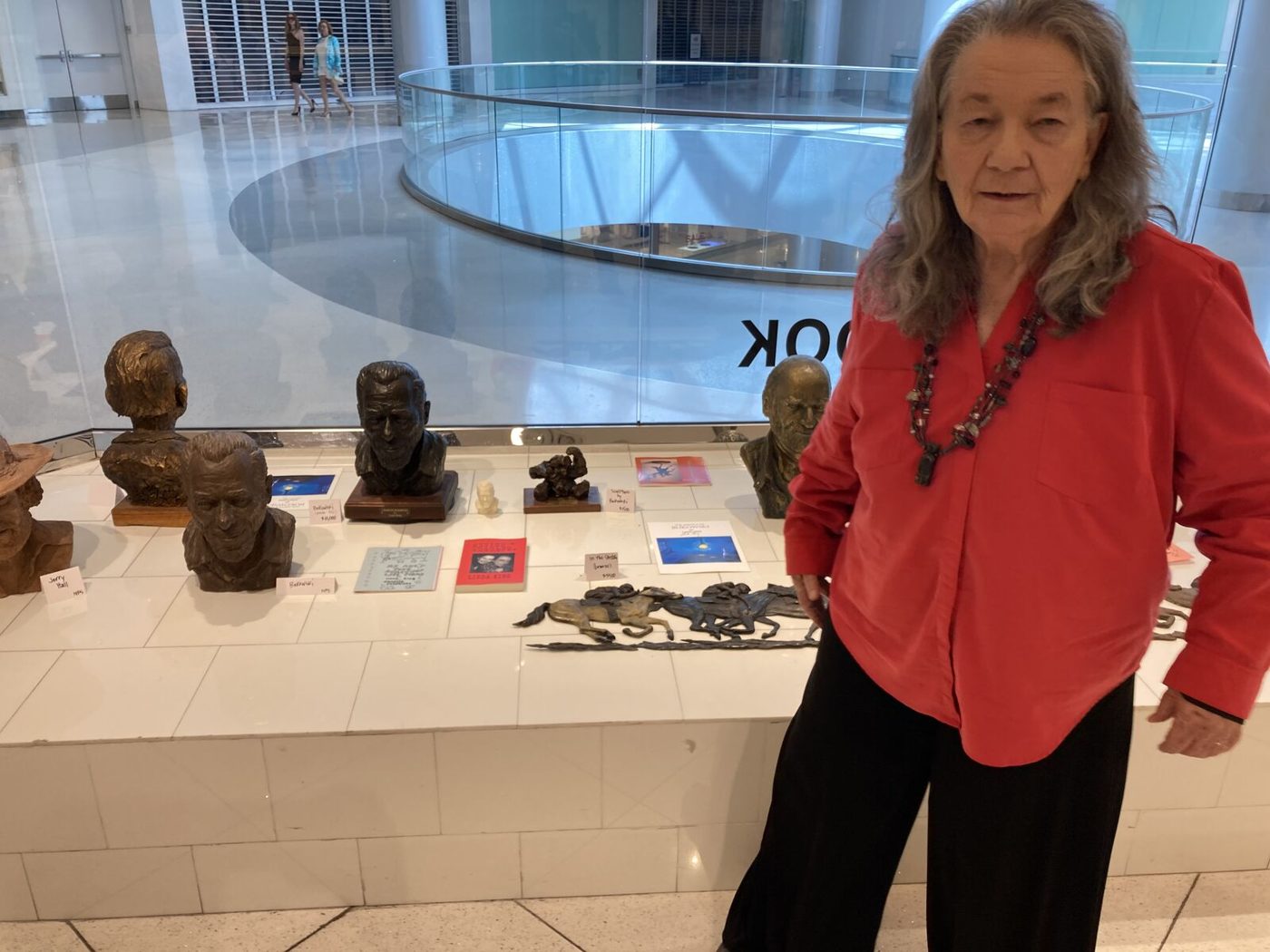
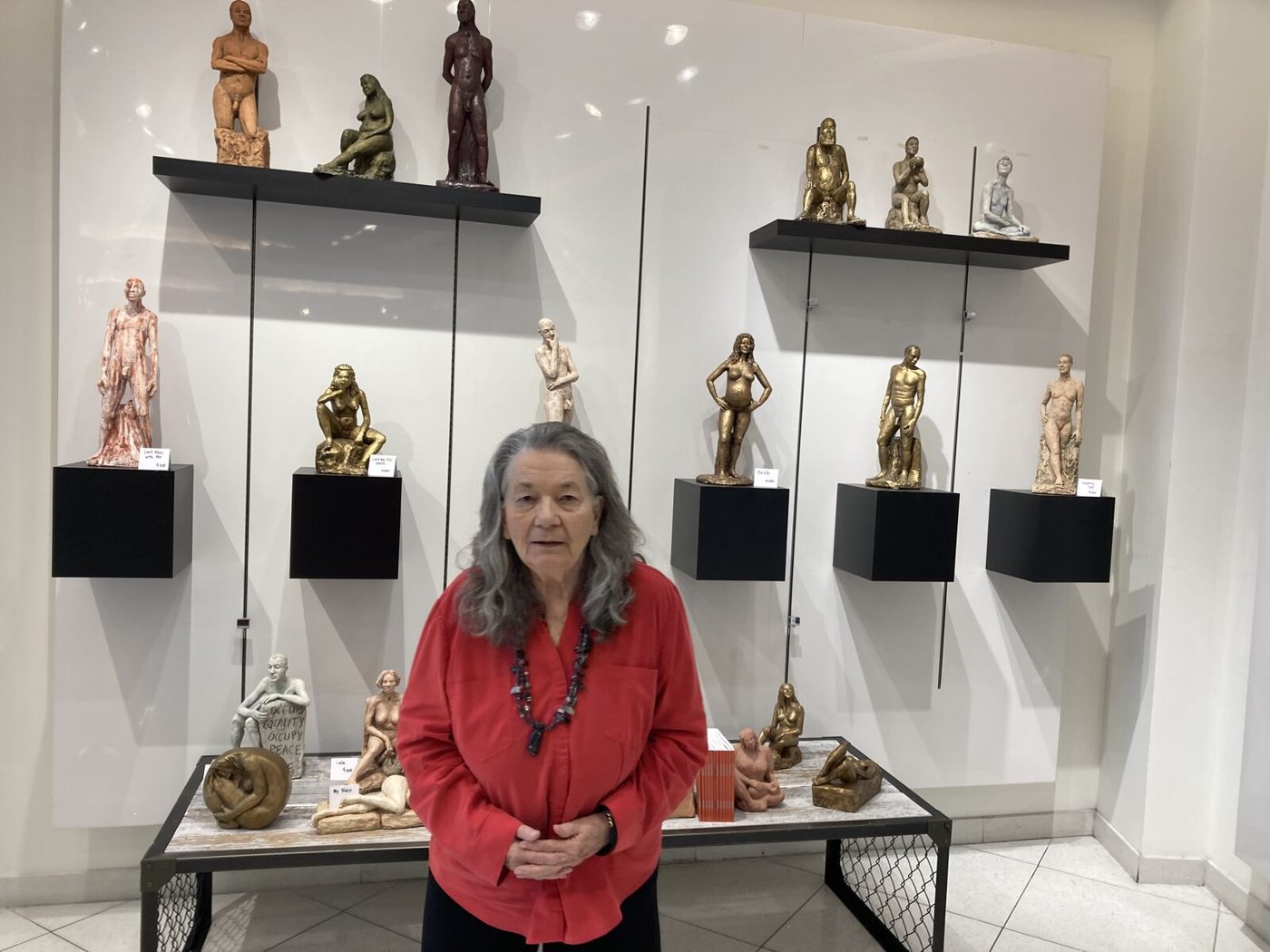
Eighteen years later, on June 20, 2026, Linda’s son Scott Dylyn Hall produced a one-night tribute to her at BLVK Book in the Beverly Center, Los Angeles. Her bust of Bukowski was the centerpiece. The original Bukowski Undigested paintings were shown together for the first time in seventeen years. A previously unpublished Bukowski poem written for Linda was read aloud for the first time, more than fifty years after he wrote it, and the French composer Bruno Letort premiered a new setting of her poetry. Sesow and his wife, the painter Dana Ellyn, came as her guest artists.
Linda King with her bronzes at BLVK Book, June 20, 2026.Her figures on the wall, June 20, 2026.Linda with one of her bronzes.The tribute, and the memoir.
When the Sesows flew home to Washington, the little man went with them.
2011Adams Morgan Washington, DC
The first golem
CHANISKI is not the first golem to stand guard in Matt Sesow’s studio.
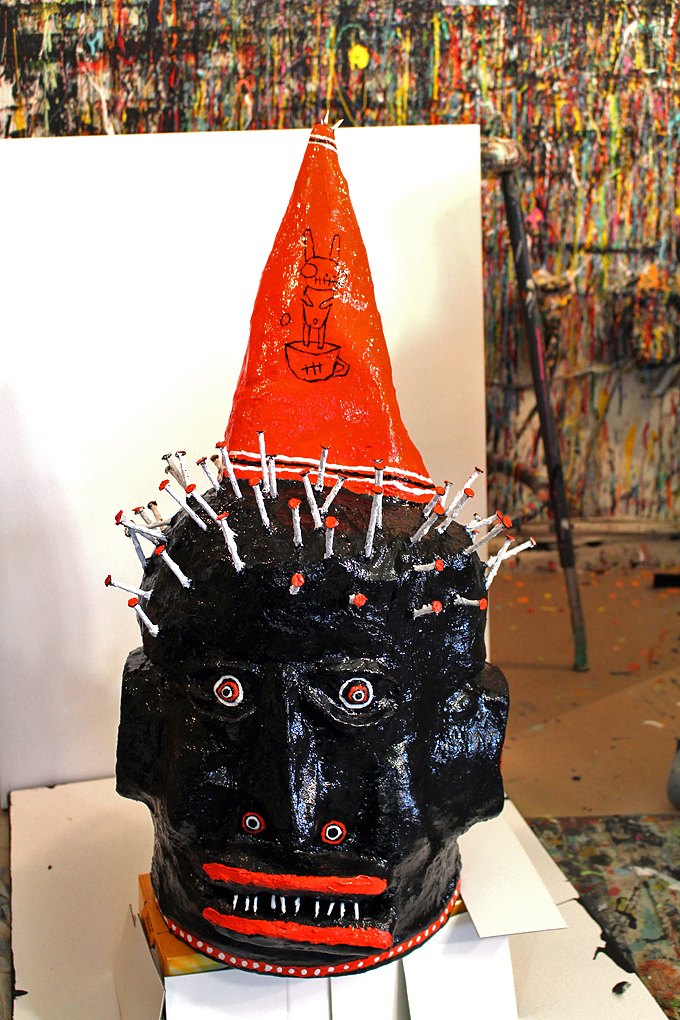
At Christmas 2011, Sesow’s parents sent him a popcorn tin. That winter, in Egypt, Hosni Mubarak was being pushed out by the Arab Spring, and in his studio in Adams Morgan Sesow started turning the tin into a head: a beheaded leader in a dunce cap, a bunny painted on the cap — a ruler who still believes he is innocent. Nails bristle around its skull. Its mouth is full of teeth.
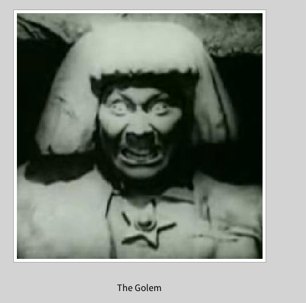
Around the same time, he and Dana went to see the 1915 silent film Der Golem at the Goethe-Institut in Washington. The old Prague legend got into him, and the tin head changed jobs.
Matt Sesow’s Studio Golem, made from a popcorn tin in his Adams Morgan studio. Exhibited at the American Visionary Art Museum in “Shock and Awe,” 2016–2017.Der Golem (1915), the silent film that turned the tin head into a guardian.
Matt Sesow — “Matt Sesow’s Studio Golem,” AVAM
“This is my ‘Studio Golem’. It ‘protects my back’ and watches over my studio and me while I paint or have my back to the door … The Golem, like me perhaps, is a lumbering creature which can’t be easily controlled. In a way, my studio Golem is a self portrait.”
The Studio Golem went to Baltimore for Sesow’s solo show “Shock and Awe” at the American Visionary Art Museum in 2016–2017. See it on the AVAM show site.
So when Bukowski’s little man came home from Los Angeles in 2026, the studio already had a job opening. One golem made of popcorn tin, one made of a drunk poet’s clay. Both self-portraits. Both on guard.
2026Washington, DC 916 G St NW
Why a golem
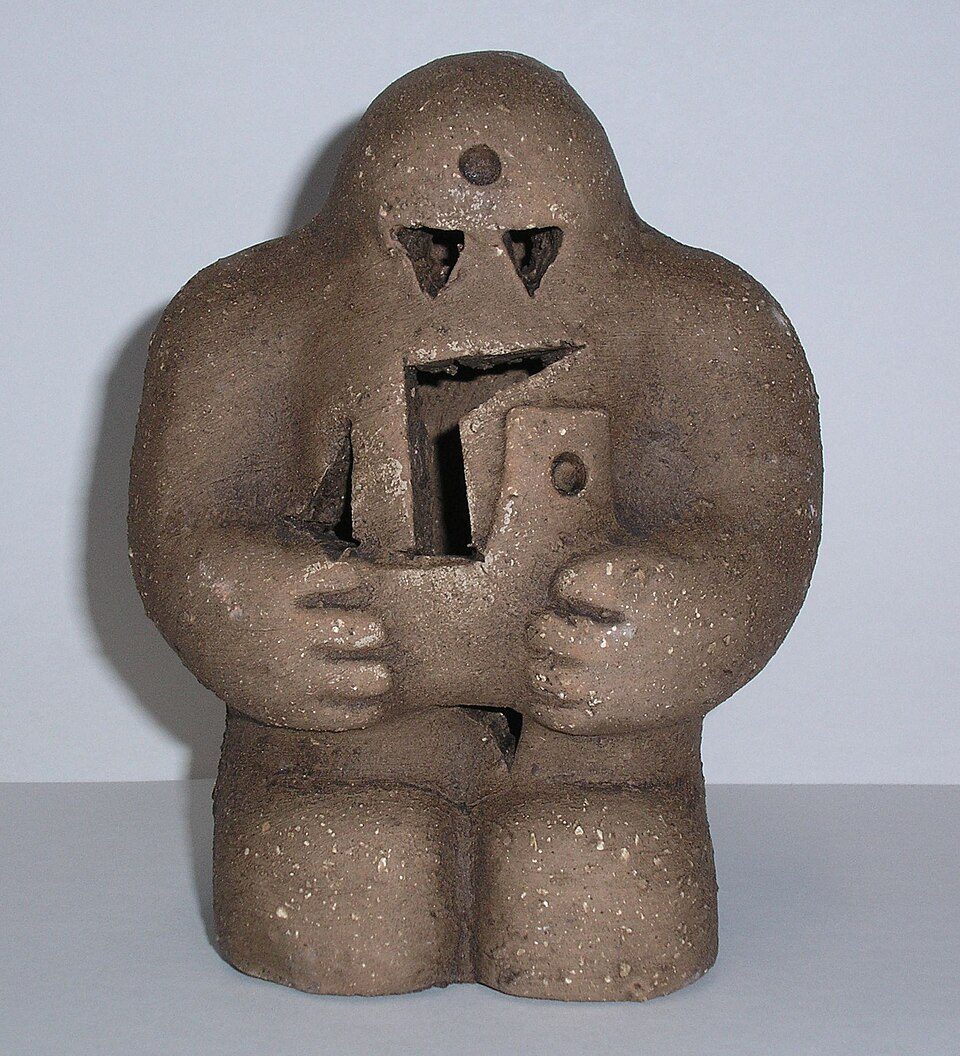
A golem is a figure shaped out of clay by hand and brought to life to stand guard.
In the old Prague legend, a rabbi shaped one from river mud to protect his people. It is one of the oldest stories there is about making a body out of earth and giving it a job.
CHANISKI fits. A man pulled out of mud in a single defiant night by a writer who was no sculptor. Nearly unmade by his own maker the next morning. Saved by the one person in the room who knew what clay was worth. Hardened into bronze, with the fingerprints still in it — the closest thing a sculpture has to a pulse.
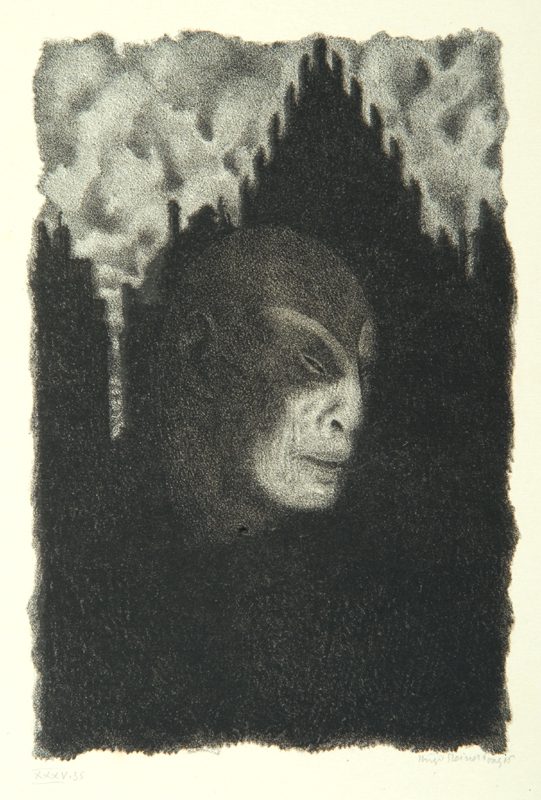
A clay golem in the Prague tradition. Public domain.Hugo Steiner-Prag’s golem, from Gustav Meyrink’s Der Golem (1915). Public domain.
Matt Sesow knows about hands. He lost his dominant hand in an accident at eight and taught himself to paint with the other one; he has sold more than 17,000 paintings made that way. He knows about alter egos too — his paintings are full of the self-figures he keeps coming back to: a rabbit, a one-winged bird, a cup.
Now Bukowski’s little man sits behind him in the studio on G Street, where he paints every day.
“It is historical and amazing. It watches over me while I paint, and provides inspiration.”Matt Sesow, September 2026
One outsider’s self-portrait, keeping watch over another outsider at work.
April 19, 2008. Eighteen years before it came home with him.
Don’t try, says the gravestone in San Pedro. The little man suggests otherwise: sometimes you get drunk, make something ugly and alive, try to smash it in the morning — and somebody who loves you says no.
☰Timeline
The long thread
Heinrich Karl Bukowski born August 16 in Andernach, Germany.
The family sails to Baltimore; by 1930 they are in Los Angeles.
Linda King born; she grows up in Boulder, Utah.
Bukowski’s first published story, in Story magazine. The “ten-year drunk” follows.
A near-fatal bleeding ulcer. He starts writing poetry.
Henry Chinaski first appears, in a short story.
John Martin’s offer; Bukowski leaves the post office at 49 to write full-time.
Linda hears him read at The Bridge, sculpts his head from life, and they fall in love.
Post Office is published. One night at Linda’s Burbank home, Bukowski makes a Medusa and the little man. Linda saves the little man.
Mockingbird Wish Me Luck, dedicated to Linda King.
They split for good. Linda moves to Phoenix.
Women is published; Linda becomes Lydia Vance.
Bukowski dies March 9 in San Pedro. Don’t Try.
“Friends and Foes of Charles Bukowski,” Paper Heart Gallery, Phoenix.
Raymond King Shurtz introduces Matt Sesow to Linda King in Phoenix.
Bukowski Undigested, illustrated by Sesow, launches April 19 at The Beat Museum. Sesow is photographed holding CHANISKI.
Linda moves to San Francisco.
Sesow turns a Christmas popcorn tin into his Studio Golem in Adams Morgan.
“Shock and Awe,” Sesow’s solo show at the American Visionary Art Museum, Baltimore, with the Studio Golem.
A later plaster casting of the little man is offered at PBA Galleries, San Francisco, as Bukowski’s “sole attempt at sculpture.”
June 20: the Linda King tribute at BLVK Book, Los Angeles. CHANISKI comes home to Washington, DC.
Sources
Linda King’s account of the night was given directly to Matt Sesow in June 2026. Clarissa’s memory of watching Bukowski work was shared with him at the Los Angeles tribute. Everything else comes from the published record:
Photos of Linda King, her sculptures, books and the June 2026 tribute: lindakingarts.com
Wikimedia Commons images, used under their licenses: Bukowski c. 1973 (Richard Robinson, public domain) · Andernach (giggel, CC BY 3.0) · Longwood Avenue house (Phatblackmama, CC BY-SA 4.0) · De Longpre bungalow and gravestone (Marika Bortolami, CC BY 2.0) · Boulder, Utah (A.E. Crane) · Bukowski signature, clay golem and Hugo Steiner-Prag illustration (public domain)
CHANISKI
By Charles Bukowski
Made in one night. Almost destroyed by morning. Saved by Linda King. Kept by Matt Sesow.